The enterprise technology landscape has changed dramatically over the last few years. Organizations are no longer focused solely on maintaining uptime—they need resilient, secure, cloud-enabled infrastructures capable of supporting hybrid workforces, AI applications, regulatory compliance, and increasingly sophisticated cyber threats.
Modern enterprises require an integrated strategy that combines networking, cloud infrastructure, cybersecurity, communications, and lifecycle management rather than managing disconnected technologies through multiple vendors.
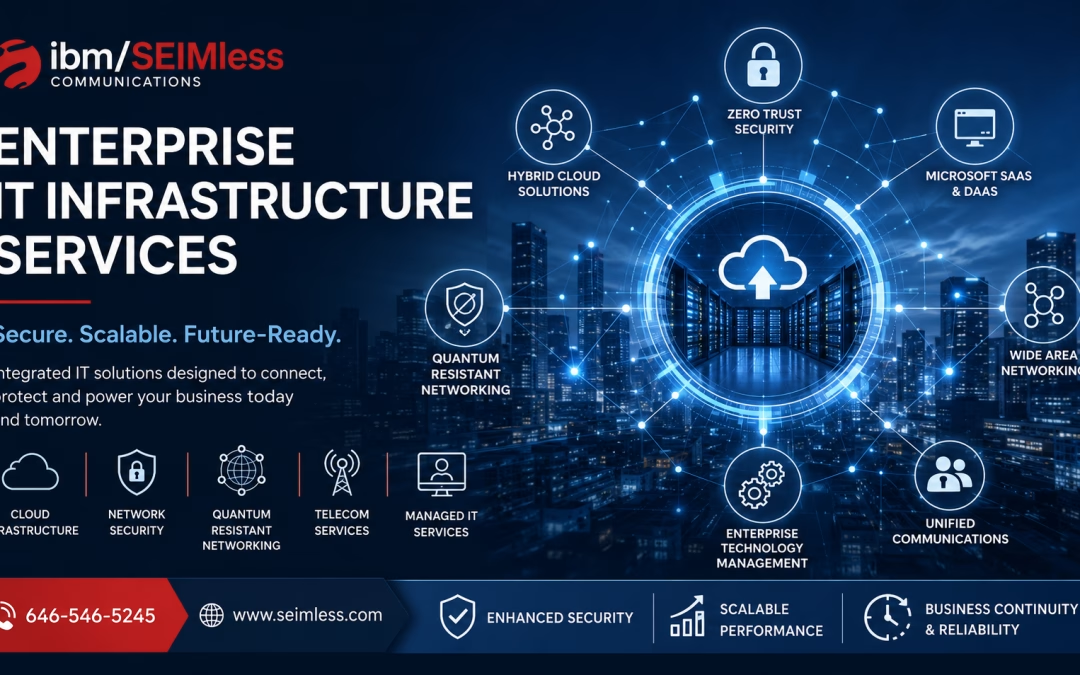
This is where ibm/SEIMless delivers value. The company’s comprehensive portfolio combines enterprise communications, cloud infrastructure, telecom, Quantum Resistant Networking, Zero Trust security, and managed technology services into a unified solution designed for organizations that need performance today and resilience for tomorrow.
Why Traditional IT Infrastructure Is No Longer Enough
Many organizations continue to rely on legacy infrastructure that creates challenges such as:
Rising cybersecurity risks
Increasing cloud complexity
Multiple vendor management
Limited scalability
High operational costs
Compliance challenges
Network latency
Business continuity concerns
As organizations adopt AI, cloud-native applications, and distributed workforces, these challenges become more significant.
A modern IT infrastructure strategy addresses these issues proactively.
Core Components of Modern Enterprise Infrastructure
1. Hybrid Cloud Infrastructure
Today’s enterprises rarely operate entirely on-premises or entirely in the cloud.
ibm/SEIMless helps organizations design cloud environments that balance performance, security, and operational efficiency.
2. Enterprise Network Security
Cyber threats continue evolving.
Organizations require security beyond traditional firewalls.
A modern security architecture should include:
Zero Trust Security
Next-Generation Firewalls
Endpoint Detection & Response (EDR)
Encryption
Identity Management
Continuous Monitoring
Secure Remote Access
These technologies reduce attack surfaces while improving visibility across enterprise networks.
3. Quantum-Resistant Networking
Quantum computing represents one of the biggest long-term cybersecurity challenges.
Although practical quantum attacks are still emerging, organizations handling sensitive financial, healthcare, government, or intellectual property data must begin preparing now.
Reliable WAN infrastructure ensures low latency, secure communication, and application performance.
6. Microsoft SaaS & Desktop as a Service
Cloud productivity platforms enable organizations to support hybrid work securely.
Benefits include:
Remote desktop access
Secure collaboration
Simplified management
Automatic updates
Reduced infrastructure costs
7. Enterprise Technology Management
Technology management extends beyond deployment.
Successful organizations require:
Strategic planning
Vendor management
Lifecycle management
Infrastructure monitoring
Capacity planning
Performance optimization
Vendor-agnostic expertise helps businesses select solutions that best fit operational requirements rather than a single vendor ecosystem.
Why Integrated Infrastructure Matters
When cloud, networking, security, communications, and management operate together, organizations gain:
Improved resilience
Reduced operational complexity
Better cybersecurity
Lower IT costs
Faster issue resolution
Greater scalability
Enhanced user experience
Regulatory compliance
Industries That Benefit Most
Enterprise IT infrastructure services are particularly valuable for:
Financial Services
Healthcare
Government
Insurance
Manufacturing
Retail
Legal
Education
Logistics
Multi-site Enterprises
Why Choose ibm/SEIMless?
Since 2001, ibm/SEIMless has focused on delivering enterprise communication and infrastructure solutions with a vendor-agnostic approach. Its services span cloud, telecom, networking, cybersecurity, and Quantum Resistant Networking, enabling organizations to modernize while preparing for future threats.
The Future of Enterprise Infrastructure
Enterprise infrastructure is evolving toward:
AI-driven operations
Zero Trust architectures
Quantum-safe encryption
Cloud-native networking
Intelligent automation
Unified communications
Predictive security analytics
Organizations investing today will be better positioned to manage tomorrow’s risks while supporting innovation and growth.
Future-Proof Your Enterprise with ibm/SEIMless
Whether you’re modernizing your cloud environment, strengthening cybersecurity, upgrading telecom services, or preparing for the quantum era, ibm/SEIMless provides integrated, enterprise-grade solutions tailored to your business.
Schedule a consultation to assess your current infrastructure and build a secure, scalable, and future-ready technology roadmap with our experts.
Frequently Asked Questions
What are enterprise IT infrastructure services? They include networking, cloud, cybersecurity, communications, storage, and technology management services that support business operations.
Why is Zero Trust important? Zero Trust verifies every user and device continuously, reducing the risk of unauthorized access.
What is Quantum Resistant Networking? It uses advanced cryptographic methods and key management to help protect sensitive data from future quantum computing threats.
Can hybrid cloud improve business continuity? Yes. Hybrid cloud environments provide flexibility, redundancy, disaster recovery, and scalability.
Why choose a vendor-agnostic provider? Vendor-agnostic providers recommend solutions based on business needs rather than a single manufacturer’s product line, allowing greater flexibility and cost optimization.
Technology has become the backbone of every successful business. Whether you’re a startup, a growing enterprise, or a large organization operating across multiple locations, your IT infrastructure must remain secure, reliable, and optimized around the clock. Downtime, cyber threats, and outdated technology can quickly impact productivity, customer trust, and profitability.
This is where Managed IT Services become a strategic advantage rather than simply an operational expense.
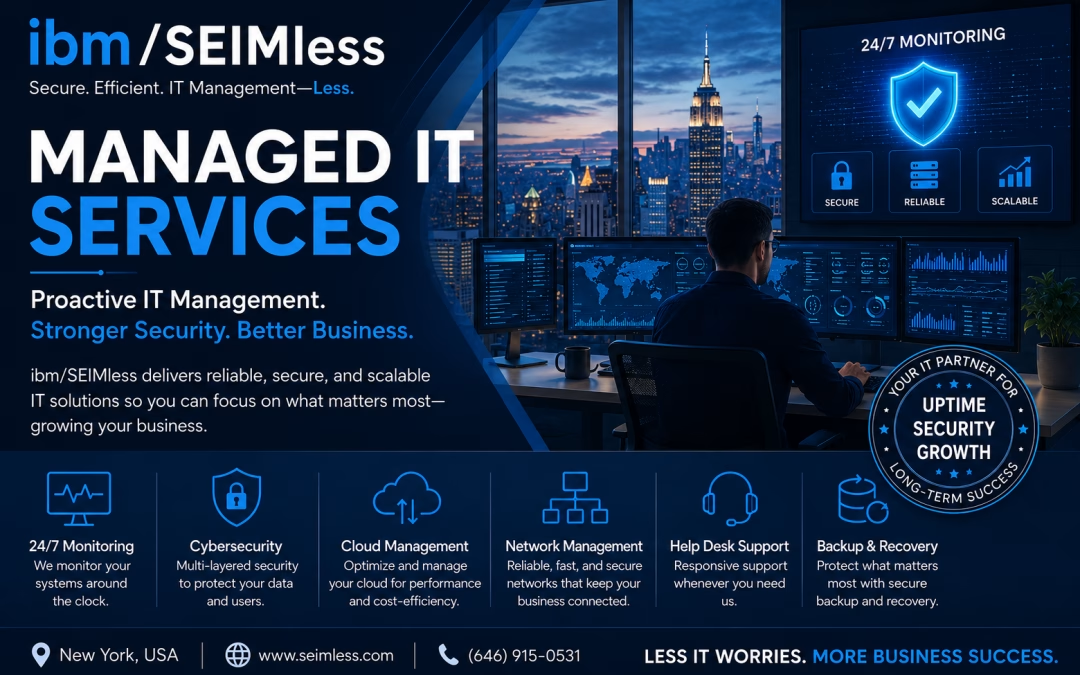
At ibm/SEIMless, we provide enterprise-grade Managed IT Services that help organizations reduce costs, improve security, increase operational efficiency, and focus on what matters most—growing their business.
What Are Managed IT Services?
Managed IT Services refer to the proactive management, monitoring, maintenance, and support of an organization’s entire IT environment by a dedicated technology partner.
Instead of waiting for systems to fail before fixing them, managed service providers continuously monitor your infrastructure to identify and resolve issues before they become business disruptions.
ibm/SEIMless combines industry-leading technology with experienced IT professionals to deliver proactive support that keeps your business running efficiently.
Why Businesses Choose Managed IT Services
Organizations are moving away from traditional break-fix IT support because modern businesses require continuous availability, stronger cybersecurity, and predictable IT costs.
The biggest advantages include:
1. Reduced IT Costs
Hiring, training, and maintaining an internal IT department can be expensive.
Managed IT Services provide:
Predictable monthly pricing
Lower operational costs
Reduced downtime
Better return on technology investments
Access to experienced IT specialists
Businesses gain enterprise-level expertise without enterprise-level staffing costs.
2. Enhanced Cybersecurity
Cyberattacks continue to evolve every year.
Businesses face threats including:
Ransomware
Phishing attacks
Data breaches
Malware
Insider threats
Zero-day vulnerabilities
ibm/SEIMless implements multiple layers of security including:
Potential issues are detected and addressed before users notice any disruption.
4. Business Continuity
Unexpected events can halt operations.
These include:
Hardware failures
Power outages
Natural disasters
Cyberattacks
Human error
ibm/SEIMless designs comprehensive disaster recovery and backup strategies to ensure critical business data remains protected and recoverable.
5. Increased Productivity
Employees work more efficiently when technology simply works.
Managed IT Services eliminate:
Slow computers
Network interruptions
Software conflicts
Login issues
Connectivity problems
Less downtime means higher productivity and better customer service.
Our Managed IT Services
ibm/SEIMless offers comprehensive IT management designed to support organizations of every size.
Network Management
Your network is the foundation of digital operations.
We provide:
Network monitoring
Performance optimization
Router configuration
Switch management
VPN management
Wireless infrastructure support
SD-WAN optimization
Cloud Services Management
Modern organizations increasingly rely on cloud technologies.
Our cloud experts manage:
Cloud migration
Hybrid cloud environments
Microsoft 365
Cloud backups
Cloud security
Cloud infrastructure optimization
Endpoint Management
Every connected device represents both an opportunity and a security risk.
We manage:
Desktop computers
Laptops
Mobile devices
Remote workstations
Tablets
IoT devices
Our centralized management keeps every endpoint secure and compliant.
Server Management
Reliable servers are essential for uninterrupted business operations.
Services include:
Performance monitoring
Operating system updates
Security patches
Resource optimization
Storage management
Virtualization support
Cybersecurity Management
Cybersecurity is integrated into every Managed IT Service we provide.
Our security capabilities include:
Threat monitoring
Endpoint protection
Email security
Firewall management
Identity management
Access controls
Incident response
Compliance support
Help Desk Support
Technical issues shouldn’t slow your team down.
ibm/SEIMless provides responsive technical support for:
Software issues
Hardware troubleshooting
Account management
Printer support
Remote assistance
User onboarding
Our specialists resolve issues quickly so your employees remain productive.
Backup & Disaster Recovery
Data is one of your organization’s most valuable assets.
Our backup solutions include:
Automated backups
Encrypted storage
Off-site replication
Disaster recovery planning
Recovery testing
Rapid restoration
Your business stays resilient even during unexpected incidents.
Industries We Support
ibm/SEIMless provides Managed IT Services for organizations across multiple industries, including:
Healthcare
Manufacturing
Financial Services
Legal Firms
Education
Retail
Government
Logistics
Professional Services
Technology Companies
Small Businesses
Large Enterprises
Every organization receives customized IT solutions aligned with its business goals.
Why ibm/SEIMless?
Technology should enable business growth—not create obstacles.
Organizations choose ibm/SEIMless because we deliver:
Proactive IT management
Enterprise-grade cybersecurity
Experienced IT professionals
Scalable infrastructure solutions
Cloud expertise
Reliable support
Predictable pricing
Reduced downtime
Business-focused IT strategy
Long-term technology partnerships
We work as an extension of your internal team, helping you modernize infrastructure while reducing operational complexity.
Future-Proof Your Business
Digital transformation continues to reshape every industry. Organizations that invest in proactive IT management gain stronger security, greater agility, improved productivity, and a competitive advantage.
ibm/SEIMless helps businesses stay ahead with scalable Managed IT Services designed for today’s challenges and tomorrow’s opportunities.
Whether you’re looking to strengthen cybersecurity, migrate to the cloud, improve network performance, or fully outsource IT operations, our experts are ready to help you build a resilient technology environment.
Ready to Transform Your IT?
Partner with ibm/SEIMless to simplify technology management, improve operational efficiency, and protect your business from evolving cyber threats.
Contact ibm/SEIMless today to learn how our Managed IT Services can help your organization reduce costs, maximize uptime, and accelerate business growth.
Frequently Asked Questions
What are Managed IT Services?
Managed IT Services involve outsourcing the monitoring, maintenance, security, and management of your IT infrastructure to experienced professionals who proactively keep systems running efficiently.
Are Managed IT Services suitable for small businesses?
Yes. Small and medium-sized businesses benefit from enterprise-level IT expertise without the cost of maintaining a large in-house IT department.
Can ibm/SEIMless support cloud environments?
Absolutely. We provide cloud migration, cloud security, Microsoft 365 management, hybrid cloud support, and ongoing cloud optimization.
Do you provide cybersecurity with Managed IT Services?
Yes. Cybersecurity is integrated into our services through proactive monitoring, endpoint protection, firewall management, patching, identity management, and threat detection.
How do Managed IT Services reduce downtime?
By continuously monitoring systems, applying updates, identifying issues early, and responding quickly, Managed IT Services prevent many disruptions before they affect users.
Today’s enterprises operate in an environment where cyber threats evolve faster than traditional security infrastructures can respond. As organizations embrace cloud computing, hybrid workforces, IoT devices, AI-driven applications, and multi-site operations, network security has become more complex than ever before.
Legacy firewalls and perimeter-based security models are no longer sufficient to protect critical business assets. Organizations now require intelligent, adaptive, and scalable security frameworks capable of identifying, preventing, and responding to sophisticated attacks in real time.
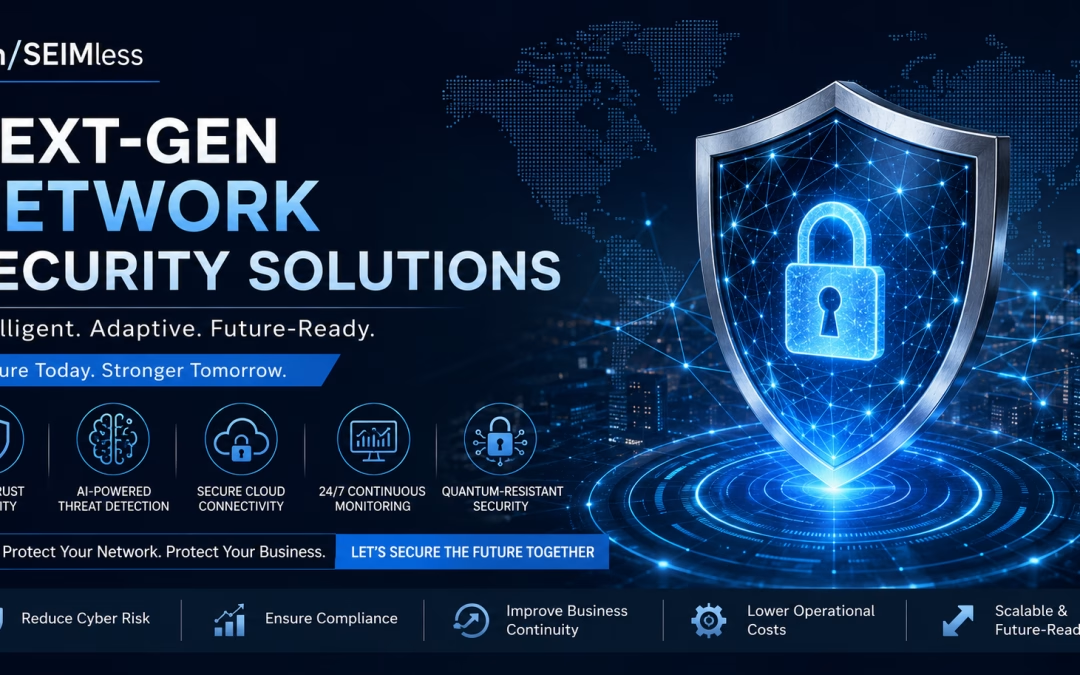
At ibm/SEIMless, we deliver Next-Gen Network Security Solutions designed to secure modern enterprises through proactive threat intelligence, Zero Trust architecture, AI-powered monitoring, secure connectivity, and quantum-resistant networking technologies. Our goal is simple—help organizations stay protected while enabling business growth without compromising performance.
Why Traditional Network Security Is No Longer Enough
Cybercriminals no longer rely on simple malware or phishing campaigns. Modern attacks leverage automation, AI, ransomware-as-a-service, insider threats, supply chain vulnerabilities, and advanced persistent threats (APTs).
Common business challenges include:
Increasing ransomware attacks
Cloud security gaps
Remote workforce vulnerabilities
Insider threats
Regulatory compliance requirements
Multi-cloud visibility issues
Data breaches
Zero-day exploits
Organizations need intelligent security ecosystems instead of isolated security products.
Instead of reacting to attacks after they occur, modern security focuses on preventing threats before they impact business operations.
ibm/SEIMless Next-Gen Network Security Solutions
At ibm/SEIMless, we combine advanced networking expertise with modern cybersecurity strategies to deliver enterprise-grade protection.
Zero Trust Security
Every user, application, and device is continuously verified before gaining network access. Trust is never assumed.
Benefits include:
Reduced insider threats
Secure remote workforce
Identity-based access
Micro-segmentation
Continuous authentication
AI-Powered Threat Detection
Artificial Intelligence analyzes billions of network events to detect suspicious behavior before it becomes a breach.
Capabilities include:
Behavioral analytics
Real-time anomaly detection
Automated incident response
Predictive threat intelligence
Quantum-Resistant Network Security
As quantum computing advances, traditional encryption methods face increasing risks.
ibm/SEIMless incorporates quantum-resistant communication technologies to help organizations prepare for future cybersecurity challenges while protecting sensitive business communications today.
Secure Hybrid & Multi-Cloud Networking
Businesses increasingly operate across:
AWS
Microsoft Azure
Google Cloud
Private Data Centers
Hybrid Infrastructure
Our solutions provide consistent security policies across every environment.
24/7 Continuous Security Monitoring
Cyber threats never stop.
Neither do we.
Our continuous monitoring services include:
Security Operations Center (SOC)
Threat Intelligence
Incident Detection
Automated Alerts
Security Reporting
Compliance Monitoring
Industries We Protect
Our Next-Gen Network Security Solutions support organizations across numerous industries including:
Financial Services
Healthcare
Government
Manufacturing
Telecommunications
Defense
Energy
Retail
Education
Critical Infrastructure
Key Features
Our comprehensive security framework includes:
Advanced Firewall Protection
Secure SD-WAN
Network Segmentation
Identity Access Management
Multi-Factor Authentication
AI Security Analytics
Endpoint Protection
Cloud Security
Data Encryption
Threat Intelligence
Secure Remote Access
Compliance Reporting
Incident Response
Vulnerability Assessments
Penetration Testing
Business Benefits
Organizations partnering with ibm/SEIMless gain:
Reduced Cyber Risk
Proactively identify threats before they impact operations.
Improved Business Continuity
Maintain secure operations with minimal downtime.
Regulatory Compliance
Support compliance with industry standards and cybersecurity frameworks.
Lower Operational Costs
Automated security reduces manual workloads while improving efficiency.
Scalable Protection
Security that grows alongside your organization.
Future-Ready Infrastructure
Prepare today for tomorrow’s cybersecurity challenges.
Why Choose ibm/SEIMless?
Organizations choose ibm/SEIMless because we provide:
Enterprise-grade cybersecurity expertise
Customized security architecture
AI-powered threat intelligence
Quantum-resistant networking innovation
End-to-end security lifecycle management
Scalable enterprise solutions
Experienced security professionals
Continuous monitoring and support
We don’t simply deploy security products—we build resilient cybersecurity ecosystems.
The Future of Network Security
Cybersecurity is rapidly evolving with emerging technologies such as:
Cyber threats continue to evolve, but your security strategy should evolve even faster.
ibm/SEIMless delivers intelligent, scalable, and future-ready Next-Gen Network Security Solutions that help organizations protect critical assets, secure digital transformation initiatives, and maintain operational resilience.
Whether you’re modernizing your infrastructure, securing cloud environments, or preparing for quantum-era cybersecurity, our experts are ready to help you build a stronger and more resilient network.
They are advanced cybersecurity frameworks that combine AI, Zero Trust, cloud security, threat intelligence, and continuous monitoring to protect modern enterprise networks.
Why is Zero Trust important?
Zero Trust verifies every user and device before granting access, significantly reducing unauthorized access and insider threats.
Can ibm/SEIMless secure hybrid cloud environments?
Yes. Our solutions are designed to secure on-premises, cloud, and hybrid infrastructures with unified security policies.
How do AI-powered security solutions improve protection?
AI identifies abnormal behavior, detects threats faster, automates responses, and reduces the time needed to contain cyber incidents.
Is quantum-resistant security necessary today?
Organizations handling sensitive data should begin preparing now, as quantum computing will eventually challenge traditional encryption methods.
Digital transformation has accelerated at an unprecedented pace. Businesses today rely heavily on cloud infrastructure, remote connectivity, real-time communications, and distributed networks to support daily operations. While these advancements have increased efficiency and productivity, they have also expanded the cybersecurity threat landscape.
Traditional security architectures were designed to defend against today’s threats. However, the rapid evolution of quantum computing is creating new challenges that many organizations are unprepared to address. As quantum technologies mature, current encryption methods may become vulnerable, exposing sensitive business data, communications, and intellectual property.
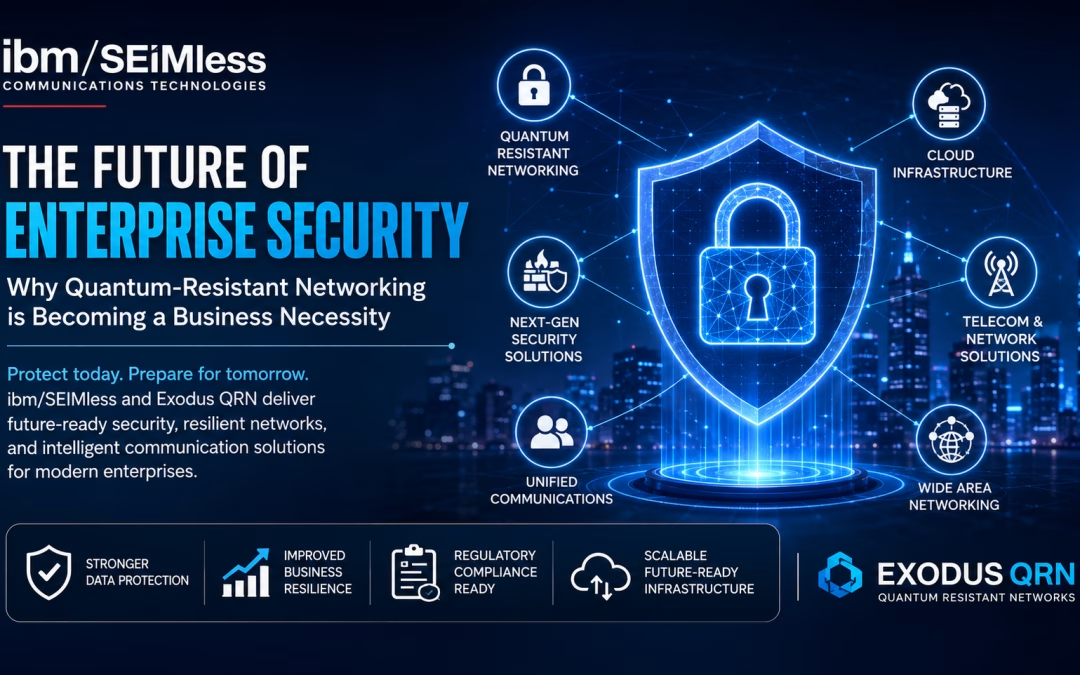
This is where ibm/SEIMless Communications Technologies and Exodus QRN are helping organizations prepare for the next generation of cybersecurity challenges through Quantum Resistant Networking, advanced network security solutions, cloud infrastructure, and enterprise communications services.
Understanding the Quantum Security Challenge
For decades, organizations have relied on encryption algorithms to secure data in transit and at rest. These cryptographic systems form the foundation of modern cybersecurity, protecting financial transactions, healthcare records, government communications, and enterprise networks.
However, cybersecurity experts increasingly recognize the risk posed by future quantum computing capabilities. Organizations are now beginning to adopt post-quantum security strategies to protect long-term sensitive information from emerging threats. The concept of quantum-resistant networking focuses on implementing advanced encryption and key management frameworks designed to withstand future computational attacks.
Businesses that proactively adopt quantum-resistant technologies today can significantly reduce future security risks while maintaining compliance and customer trust.
What Makes Quantum Resistant Networking Different?
Quantum Resistant Networking (QRN) goes beyond traditional network security by integrating advanced encryption, secure key management, and enhanced protection for data throughout its lifecycle.
By implementing a quantum-resistant architecture, organizations can create a future-ready security foundation that protects critical information against both current and emerging threats.
Building a Multi-Layered Security Strategy
Modern cybersecurity requires more than a firewall. Today’s organizations must secure users, endpoints, applications, cloud environments, and data simultaneously.
A comprehensive security strategy should include:
Next-Generation Firewalls
Advanced firewalls provide deep packet inspection, application awareness, threat intelligence integration, and real-time traffic analysis to identify and block sophisticated attacks before they reach critical systems.
Endpoint Detection and Response (EDR)
With remote work becoming standard across many industries, endpoint protection is now a crucial security layer. EDR solutions continuously monitor devices, detect suspicious activity, and automate incident response to minimize risk.
Zero Trust Security
The Zero Trust model assumes that no user or device should be trusted automatically. Every access request is verified, authenticated, and continuously monitored, significantly reducing unauthorized access risks.
Transparent Encryption
Data encryption should operate seamlessly without impacting user productivity. Transparent encryption technologies help organizations secure sensitive information while maintaining operational efficiency.
The Role of Cloud Infrastructure in Modern Enterprises
Cloud computing continues to transform how businesses operate. Organizations increasingly require scalable, secure, and resilient infrastructure that supports hybrid work environments and digital transformation initiatives.
Modern cloud solutions provide:
Public Cloud Deployments
Private Cloud Environments
Hybrid Cloud Architectures
Disaster Recovery Solutions
Backup and Recovery Services
High Availability Infrastructure
When integrated with advanced security frameworks, cloud infrastructure becomes a powerful enabler of business growth and operational resilience.
Why Wide Area Networking Still Matters
Many organizations operate across multiple offices, regions, and countries. Reliable Wide Area Networking (WAN) remains critical for connecting users, applications, and data centers securely.
Enterprise WAN solutions help organizations achieve:
Low-Latency Connectivity
Secure Data Transport
Improved Network Performance
Scalable Bandwidth
Business Continuity
Multi-Site Connectivity
Solutions such as Ethernet services, private networking, dark fiber, and dedicated transport services provide businesses with the flexibility needed to support modern workloads and growing data demands.
Unified Communications and Business Productivity
Communication remains the backbone of every successful organization. Modern enterprises require integrated communication systems that support voice, messaging, collaboration, and customer engagement.
These technologies improve employee productivity, enhance customer experiences, and reduce operational costs.
Why Businesses Are Choosing ibm/SEIMless
For more than two decades, ibm/SEIMless has provided technology solutions designed to help organizations improve security, performance, scalability, and operational efficiency. The company’s vendor-neutral approach enables clients to receive customized solutions that align with their unique business requirements rather than forcing them into predefined technology ecosystems.
By combining Quantum Resistant Networking, advanced cybersecurity, cloud infrastructure, enterprise communications, and network services, ibm/SEIMless delivers a comprehensive technology strategy designed for both current operational needs and future security challenges.
Conclusion
The future of enterprise cybersecurity extends beyond traditional defenses. Organizations must prepare for emerging threats while maintaining operational excellence today. Quantum-resistant networking, advanced security frameworks, cloud infrastructure, and intelligent communications solutions provide the foundation for long-term success.
Businesses that invest in future-ready technologies today will be better positioned to protect critical assets, maintain compliance, and gain a competitive advantage in an increasingly connected digital world.
With innovative solutions from ibm/SEIMless and Exodus QRN, organizations can confidently move toward a more secure, scalable, and resilient future.
What Organizations Must Learn from the Latest Supply Chain Attack
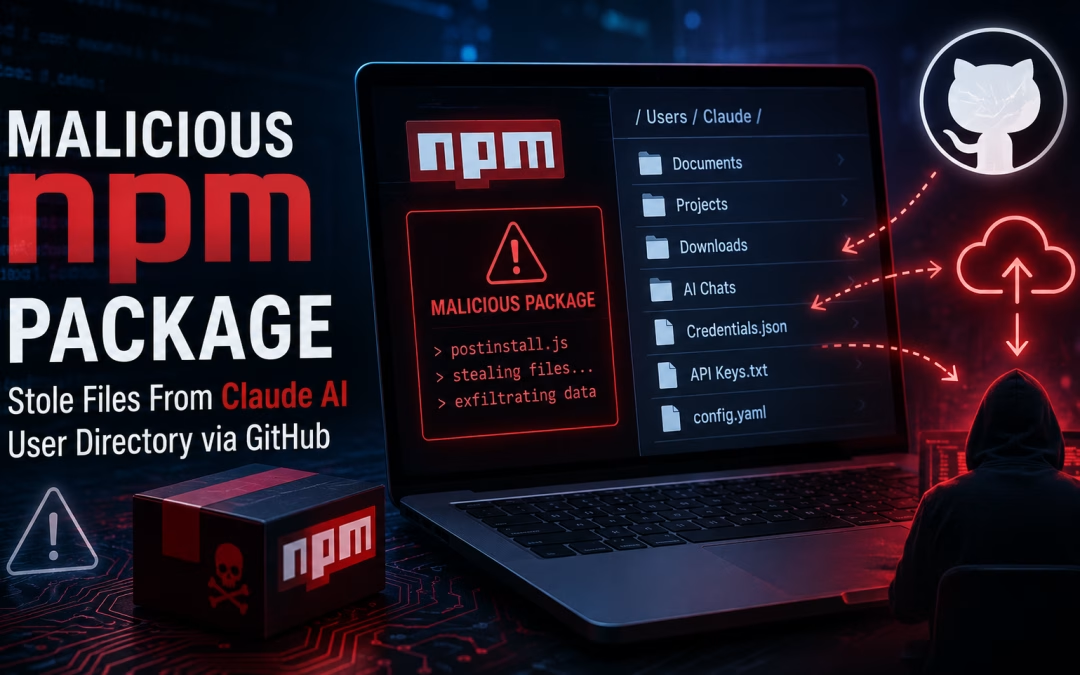
Malicious npm Package Stole Files From Claude AI User Directory via GitHub
The open-source ecosystem continues to be one of the most valuable resources for developers worldwide. However, its popularity also makes it a prime target for cybercriminals. A recently discovered malicious npm package demonstrated how attackers can weaponize trusted development platforms to compromise users and steal sensitive information.
According to security researchers, the malicious package specifically targeted users of Claude AI by attempting to access files stored within local user directories and exfiltrate data through GitHub repositories. The incident highlights a growing trend in software supply chain attacks, where attackers exploit trusted developer tools and repositories rather than directly targeting organizations.
For businesses, government agencies, and technology providers, this event serves as another reminder that cybersecurity threats increasingly originate from legitimate-looking software components.
Understanding the Attack
The malicious npm package appeared to function as a legitimate development dependency. Once installed, it executed hidden code designed to locate sensitive files associated with Claude AI user environments.
Instead of triggering traditional malware alerts, the package leveraged normal developer workflows. By abusing GitHub-related functionality, the malware attempted to transfer harvested data to attacker-controlled infrastructure.
This attack demonstrates several concerning trends:
Modern attackers understand that compromising a developer workstation can provide access to source code, API keys, authentication tokens, proprietary data, and cloud environments.
Why npm Remains a High-Value Target
The npm ecosystem contains millions of packages used by organizations of every size. While this extensive ecosystem accelerates innovation, it also creates a significant attack surface.
Threat actors commonly exploit npm through:
Typosquatting
Creating packages with names similar to popular libraries.
Dependency Confusion
Tricking systems into downloading malicious packages instead of trusted internal dependencies.
Account Takeovers
Compromising maintainer accounts to inject malicious code into legitimate packages.
Hidden Payloads
Embedding obfuscated malware that activates after installation.
As organizations increasingly adopt AI development tools, attackers are now targeting developer environments where valuable intellectual property resides.
The Growing Intersection of AI and Cybersecurity
Artificial Intelligence platforms have transformed software development. Tools such as Claude AI, GitHub Copilot, and other AI assistants enable developers to accelerate coding, debugging, and research activities.
Unfortunately, attackers have adapted quickly.
AI environments often contain:
Proprietary source code
Research documents
Business intelligence
API credentials
Authentication tokens
Cloud configuration files
Internal project documentation
A compromised AI workstation can provide attackers with direct access to sensitive organizational assets.
This is why organizations must implement a comprehensive cybersecurity strategy that protects both traditional IT infrastructure and emerging AI workflows.
Supply Chain Security Is Now a Boardroom Issue
Software supply chain attacks have evolved from isolated incidents into strategic cyber threats.
High-profile attacks over recent years have demonstrated that attackers increasingly prefer infiltrating trusted software ecosystems instead of breaching hardened enterprise perimeters.
The latest npm incident reinforces several security realities:
Trust Must Be Verified
Organizations should never assume a package is safe simply because it exists within a trusted repository.
Continuous Monitoring Is Essential
Security teams require real-time visibility into package installations, updates, and unusual behaviors.
Zero Trust Principles Apply to Development Environments
Every component should be authenticated, validated, and continuously monitored.
AI Systems Require Dedicated Security Controls
AI tools are becoming critical business assets and must receive the same protection as production systems.
How Organizations Can Reduce Supply Chain Risk
Organizations can significantly reduce exposure by implementing several best practices.
1. Enforce Dependency Scanning
Automated dependency analysis can identify malicious or vulnerable packages before deployment.
2. Adopt Software Bill of Materials (SBOM)
SBOM frameworks provide visibility into software components and dependencies.
3. Implement Least-Privilege Access
Developers and applications should only receive permissions required for their specific functions.
4. Monitor GitHub and Repository Activity
Suspicious commits, package updates, and repository changes should trigger security reviews.
5. Strengthen Endpoint Protection
Modern endpoint detection and response (EDR) solutions can identify unusual package behaviors.
6. Secure AI Development Workflows
AI-assisted development environments require dedicated monitoring, access controls, and threat detection mechanisms.
The Role of Quantum-Resistant Security in Future Defense Strategies
As cyber threats become increasingly sophisticated, organizations must prepare for future attack vectors as well.
Ibm/SEIMless Communications Technologies, Inc. continues to focus on advanced cybersecurity and Quantum Resistant Network (QRN) technologies designed to help organizations protect sensitive communications against emerging threats.
Future-ready security architectures should incorporate:
These resources provide valuable guidance for securing software development pipelines and mitigating supply chain risks.
Final Thoughts
The malicious npm package targeting Claude AI users demonstrates how rapidly cybercriminals are adapting their techniques to exploit modern development environments.
The attack was not merely a malware incident—it was a warning about the growing convergence of AI platforms, open-source ecosystems, and software supply chain vulnerabilities.
Organizations that proactively strengthen dependency management, monitor development environments, and adopt advanced security architectures will be significantly better positioned to defend against future threats.
As software ecosystems continue to evolve, cybersecurity must remain an integral part of every development workflow. The organizations that prioritize supply chain security today will be the ones best prepared for tomorrow’s threat landscape.
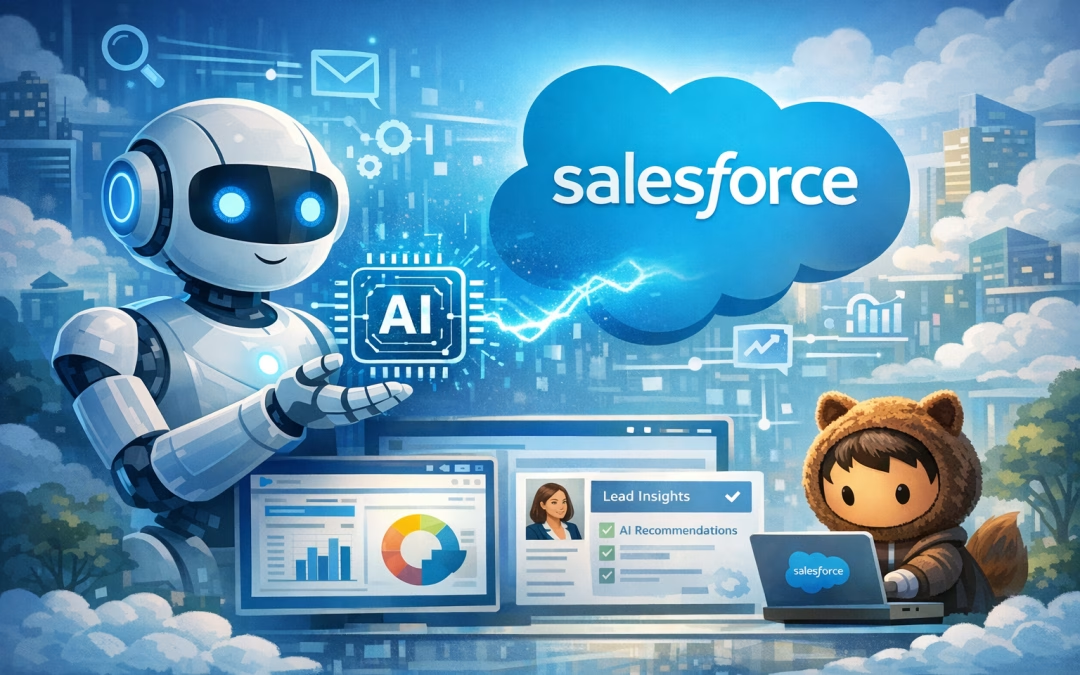
Enterprise AI is no longer defined by who owns the model—it’s defined by who controls access, integration, and security. While Anthropic maintains tight restrictions on its most advanced systems, its production-grade AI, Claude, is already embedded inside platforms like Salesforce—giving enterprises immediate, governed access to artificial intelligence.
Anthropic’s decision to limit direct access to its most advanced systems is rooted in safety, alignment, and governance. Frameworks discussed in AI governance standards by NIST and ongoing research from AI safety and research initiatives emphasize the importance of controlled deployment environments.
Key Reasons Behind Restricted Access
Mitigation of autonomous risk
Alignment with human intent
Controlled enterprise-grade deployment
Regulatory and compliance readiness
The Hidden Risk: AI Integration Without Security
As AI becomes embedded into platforms like Salesforce, a new challenge emerges—data security across distributed systems. According to AI and quantum innovation insights, the next wave of enterprise transformation will depend heavily on secure digital infrastructure.
This is where most organizations are underprepared.
Critical Risk Areas
Data exposure across API layers
Model interaction vulnerabilities
Cross-platform data transmission risks
Lack of quantum-resilient encryption
ibm/SEIMless Approach: Securing the AI-Driven Enterprise
At ibm/SEIMless Communications Technologies, the focus is not just on enabling AI—but securing it for the future. Our architecture is designed around:
As highlighted in AI thought leadership insights, organizations that prioritize security-first AI strategies will lead the next decade of innovation.
Strategic Takeaways
AI is becoming invisible infrastructure, not a standalone tool
Embedded AI platforms like Salesforce are accelerating adoption
Security is now the primary differentiator in AI success
Quantum-resilient systems will define enterprise readiness
Anthropic may not allow direct access to systems like Mythos—but through Claude’s integration into enterprise platforms, its AI is already transforming business operations. At ibm/SEIMless, we ensure that as AI becomes deeply embedded in your ecosystem, your security layer remains unbreakable.