The enterprise technology landscape has changed dramatically over the last few years. Organizations are no longer focused solely on maintaining uptime—they need resilient, secure, cloud-enabled infrastructures capable of supporting hybrid workforces, AI applications, regulatory compliance, and increasingly sophisticated cyber threats.
Modern enterprises require an integrated strategy that combines networking, cloud infrastructure, cybersecurity, communications, and lifecycle management rather than managing disconnected technologies through multiple vendors.
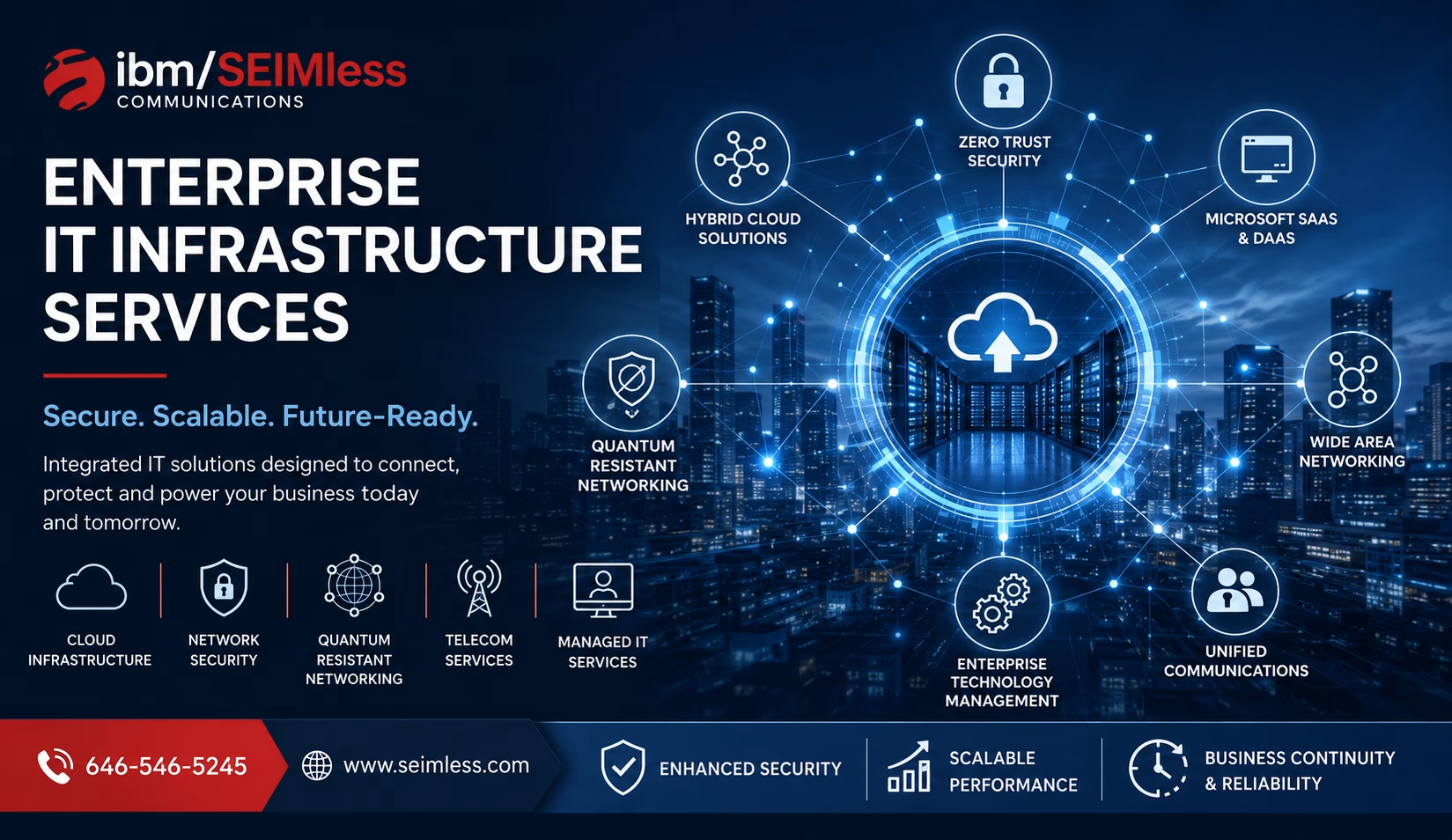
This is where ibm/SEIMless delivers value. The company’s comprehensive portfolio combines enterprise communications, cloud infrastructure, telecom, Quantum Resistant Networking, Zero Trust security, and managed technology services into a unified solution designed for organizations that need performance today and resilience for tomorrow.
Why Traditional IT Infrastructure Is No Longer Enough
Many organizations continue to rely on legacy infrastructure that creates challenges such as:
- Rising cybersecurity risks
- Increasing cloud complexity
- Multiple vendor management
- Limited scalability
- High operational costs
- Compliance challenges
- Network latency
- Business continuity concerns
As organizations adopt AI, cloud-native applications, and distributed workforces, these challenges become more significant.
A modern IT infrastructure strategy addresses these issues proactively.
Core Components of Modern Enterprise Infrastructure
1. Hybrid Cloud Infrastructure
Today’s enterprises rarely operate entirely on-premises or entirely in the cloud.
Instead, they deploy:
Benefits include:
- Improved scalability
- Disaster recovery
- Business continuity
- Flexible workload placement
- Lower capital expenditure
- Faster deployment
ibm/SEIMless helps organizations design cloud environments that balance performance, security, and operational efficiency.
2. Enterprise Network Security
Cyber threats continue evolving.
Organizations require security beyond traditional firewalls.
A modern security architecture should include:
- Zero Trust Security
- Next-Generation Firewalls
- Endpoint Detection & Response (EDR)
- Encryption
- Identity Management
- Continuous Monitoring
- Secure Remote Access
These technologies reduce attack surfaces while improving visibility across enterprise networks.
3. Quantum-Resistant Networking
Quantum computing represents one of the biggest long-term cybersecurity challenges.
Although practical quantum attacks are still emerging, organizations handling sensitive financial, healthcare, government, or intellectual property data must begin preparing now.
Quantum Resistant Networking provides protection through:
- Advanced key management
- Data-in-motion encryption
- Data-at-rest protection
- Future-ready cryptographic architecture
ibm/SEIMless integrates its Exodus QRN platform to help organizations prepare for the post-quantum era.
4. Enterprise Telecom Services
Business communication remains critical.
Modern telecom infrastructure includes:
- SIP Trunking
- Cloud PBX
- VoIP
- Unified Communications
- Business Messaging
- Video Collaboration
Integrated telecom services reduce costs while improving workforce productivity.
5. Wide Area Networking (WAN)
Organizations with multiple locations require reliable connectivity.
Modern WAN solutions include:
- Ethernet
- Private Lines
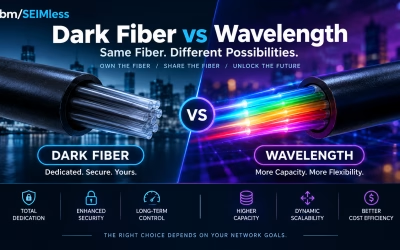
- Dark Fiber
- Wavelength Services
- Carrier Diversity
Reliable WAN infrastructure ensures low latency, secure communication, and application performance.
6. Microsoft SaaS & Desktop as a Service
Cloud productivity platforms enable organizations to support hybrid work securely.
Benefits include:
- Remote desktop access
- Secure collaboration
- Simplified management
- Automatic updates
- Reduced infrastructure costs
7. Enterprise Technology Management
Technology management extends beyond deployment.
Successful organizations require:
- Strategic planning
- Vendor management
- Lifecycle management
- Infrastructure monitoring
- Capacity planning
- Performance optimization
Vendor-agnostic expertise helps businesses select solutions that best fit operational requirements rather than a single vendor ecosystem.
Why Integrated Infrastructure Matters
When cloud, networking, security, communications, and management operate together, organizations gain:
- Improved resilience
- Reduced operational complexity
- Better cybersecurity
- Lower IT costs
- Faster issue resolution
- Greater scalability
- Enhanced user experience
- Regulatory compliance
Industries That Benefit Most
Enterprise IT infrastructure services are particularly valuable for:
- Financial Services
- Healthcare
- Government
- Insurance
- Manufacturing
- Retail
- Legal
- Education
- Logistics
- Multi-site Enterprises
Why Choose ibm/SEIMless?
Since 2001, ibm/SEIMless has focused on delivering enterprise communication and infrastructure solutions with a vendor-agnostic approach. Its services span cloud, telecom, networking, cybersecurity, and Quantum Resistant Networking, enabling organizations to modernize while preparing for future threats.
The Future of Enterprise Infrastructure
Enterprise infrastructure is evolving toward:
- AI-driven operations
- Zero Trust architectures
- Quantum-safe encryption
- Cloud-native networking
- Intelligent automation
- Unified communications
- Predictive security analytics
Organizations investing today will be better positioned to manage tomorrow’s risks while supporting innovation and growth.
Future-Proof Your Enterprise with ibm/SEIMless
Whether you’re modernizing your cloud environment, strengthening cybersecurity, upgrading telecom services, or preparing for the quantum era, ibm/SEIMless provides integrated, enterprise-grade solutions tailored to your business.
Schedule a consultation to assess your current infrastructure and build a secure, scalable, and future-ready technology roadmap with our experts.
Frequently Asked Questions
What are enterprise IT infrastructure services?
They include networking, cloud, cybersecurity, communications, storage, and technology management services that support business operations.
Why is Zero Trust important?
Zero Trust verifies every user and device continuously, reducing the risk of unauthorized access.
What is Quantum Resistant Networking?
It uses advanced cryptographic methods and key management to help protect sensitive data from future quantum computing threats.
Can hybrid cloud improve business continuity?
Yes. Hybrid cloud environments provide flexibility, redundancy, disaster recovery, and scalability.
Why choose a vendor-agnostic provider?
Vendor-agnostic providers recommend solutions based on business needs rather than a single manufacturer’s product line, allowing greater flexibility and cost optimization.