Software-Defined Networking (SDN) has transformed enterprise networking by simplifying network management, improving scalability, and enabling greater automation. For years, organizations relied on SDN to reduce hardware complexity and accelerate digital transformation.
However, the technology landscape has evolved dramatically.
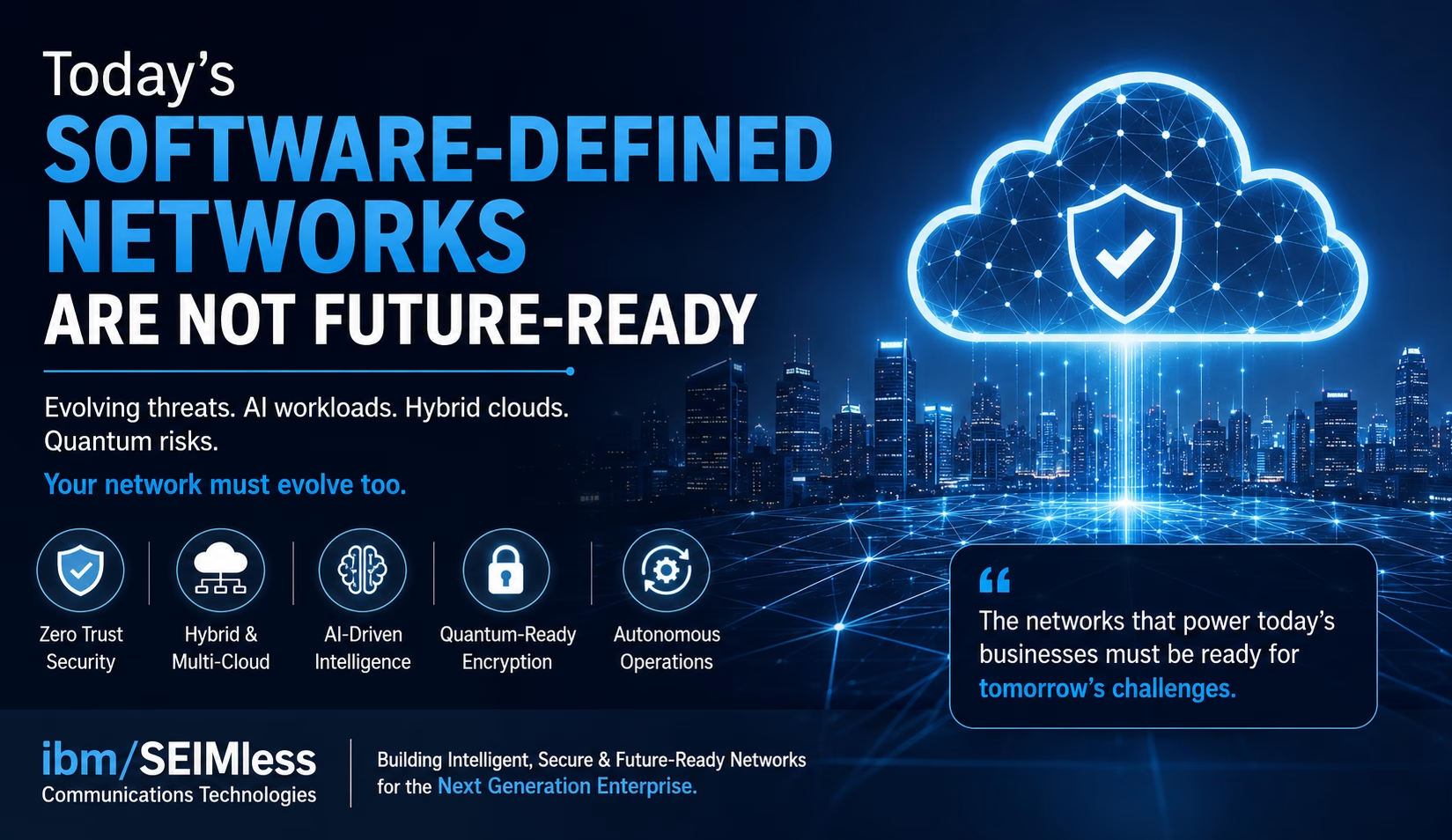
Artificial Intelligence (AI), hybrid cloud environments, edge computing, Zero Trust security models, Internet of Things (IoT), and the emerging threat of quantum computing have exposed limitations in many traditional SDN deployments. While SDN remains a foundational networking technology, many implementations were designed for yesterday’s challenges—not tomorrow’s.
Today’s businesses require intelligent, autonomous, and resilient networks capable of adapting to rapidly changing workloads and increasingly sophisticated cyber threats.
Why Traditional Software-Defined Networks Are No Longer Enough
Traditional SDN solutions were designed to improve network efficiency by separating the control plane from the data plane, allowing centralized management and automation.
Although these advantages remain valuable, modern enterprise infrastructures now demand much more.
Today’s organizations operate across:
- Multi-cloud environments
- Hybrid cloud infrastructure
- Remote workforces
- AI-powered applications
- Edge computing platforms
- Billions of connected IoT devices
- Mission-critical digital services
Legacy SDN architectures often struggle to deliver the flexibility, intelligence, and security required to support these environments effectively.
The Biggest Challenges Facing Today’s SDN Deployments
1. Cybersecurity Threats Continue to Evolve
Cyberattacks have become increasingly automated and AI-driven.
Modern attackers target centralized management systems because compromising an SDN controller can provide visibility into large portions of an organization’s network.
Future-ready networking requires:
- Zero Trust Architecture
- Continuous authentication
- AI-powered threat detection
- Automated incident response
- Behavioral analytics
- Micro-segmentation
Security must become an integrated component of the network rather than an additional layer.
2. Hybrid and Multi-Cloud Complexity
Most enterprises now operate workloads across multiple environments including private cloud, public cloud, on-premises data centers, and edge locations.
Managing consistent security policies, network visibility, and application performance across these environments remains challenging for many traditional SDN solutions.
Future-ready networking requires centralized visibility combined with distributed intelligence.
3. Artificial Intelligence Changes Network Requirements
AI applications generate entirely new traffic patterns.
Large Language Models (LLMs), machine learning workloads, and GPU-intensive applications require:
- Ultra-low latency
- High bandwidth
- Dynamic traffic optimization
- Predictive congestion management
- Intelligent workload balancing
Static routing policies cannot efficiently support modern AI environments.
AI increasingly requires AI-powered networking.
4. Preparing for the Quantum Computing Era
Although quantum computing is still evolving, organizations must begin preparing today.
Current encryption standards protecting enterprise communications could eventually become vulnerable to quantum-enabled attacks.
Organizations responsible for protecting sensitive information should evaluate quantum-resistant networking strategies before these risks become immediate.
Early planning reduces future migration complexity while strengthening long-term cybersecurity resilience.
5. Network Operations Are Becoming Too Complex
Enterprise IT teams manage thousands of devices across geographically distributed environments.
Manual configuration and reactive troubleshooting are no longer sustainable.
Modern networking platforms should provide:
- Self-monitoring
- Self-healing capabilities
- Predictive maintenance
- Automated optimization
- AI-assisted operations
- Intelligent analytics
Automation should extend beyond deployment into continuous operational improvement.
What Makes a Network Future-Ready?
A future-ready network combines traditional SDN capabilities with advanced technologies that improve security, intelligence, and adaptability.
Key characteristics include:
AI-Driven Network Intelligence
Artificial Intelligence enables networks to predict failures, optimize routing, detect anomalies, and improve application performance without constant manual intervention.
Zero Trust Security
Every user, device, workload, and application should be continuously verified before receiving network access.
Trust should never be assumed.
Quantum-Ready Encryption
Organizations should prepare for Post-Quantum Cryptography (PQC) to ensure long-term protection of sensitive communications.
Cloud-Native Architecture
Future-ready infrastructure should seamlessly integrate:
- Public cloud
- Private cloud
- Hybrid cloud
- Edge computing
- Remote offices
- SaaS platforms
Autonomous Network Operations
The next generation of enterprise networking will increasingly automate:
- Network optimization
- Security policy enforcement
- Fault detection
- Capacity planning
- Incident response
The Business Risks of Delaying Network Modernization
Organizations that postpone infrastructure modernization may experience:
- Increased cybersecurity exposure
- Higher operational costs
- Reduced network performance
- Slower digital transformation
- Compliance challenges
- Greater business disruption
- Poor support for AI initiatives
- Limited scalability
Modernizing proactively is typically more cost-effective than responding to failures after they occur.
How ibm/SEIMless Builds Future-Ready Enterprise Networks
At ibm/SEIMless Communications Technologies, we help organizations move beyond conventional Software-Defined Networking by designing intelligent, secure, and scalable enterprise infrastructure.
Our networking approach focuses on:
- Intelligent network architecture
- AI-enhanced infrastructure
- Hybrid and multi-cloud connectivity
- Zero Trust implementation
- Advanced cybersecurity integration
- Enterprise network optimization
- Infrastructure modernization
- Quantum-resistant networking initiatives through Exodus QRN
Rather than simply deploying networking technology, ibm/SEIMless helps organizations build resilient digital infrastructure capable of supporting future innovation while reducing operational complexity and cybersecurity risks.
Preparing for the Next Generation of Enterprise Networking
Networking is no longer just about connectivity.
It has become the foundation for Artificial Intelligence, cloud computing, cybersecurity, digital transformation, and future business innovation.
Organizations that continue relying solely on legacy SDN implementations risk falling behind as technology evolves.
By investing in intelligent automation, Zero Trust security, cloud-native architecture, AI-driven operations, and quantum-safe networking strategies, enterprises position themselves for sustainable growth and long-term resilience.
Future-ready networking begins with preparing today—not reacting tomorrow.
Conclusion
Software-Defined Networking transformed enterprise IT, but today’s rapidly evolving technology landscape demands more than traditional SDN architectures can provide.
Artificial Intelligence, hybrid cloud, Zero Trust security, automation, and quantum computing are reshaping how organizations build and secure their networks.
Businesses that modernize today will gain stronger cybersecurity, improved operational efficiency, greater scalability, and a competitive advantage in the digital economy.
At ibm/SEIMless, we help organizations design enterprise networks that are secure, intelligent, scalable, and ready for the challenges of tomorrow.
Frequently Asked Questions
Why are today’s software-defined networks not future-ready?
Many SDN deployments were built before AI, edge computing, hybrid cloud, and quantum-security considerations became mainstream. Modern enterprise environments require more intelligent and adaptive networking capabilities.
What is a future-ready network?
A future-ready network integrates AI, automation, Zero Trust security, cloud-native architecture, predictive analytics, and quantum-resistant encryption to support evolving business requirements.
How does AI improve enterprise networking?
AI helps optimize traffic, predict failures, automate security responses, detect anomalies, improve performance, and reduce manual network administration.
Should businesses prepare for quantum-safe networking now?
Yes. Organizations that manage sensitive data should begin planning for post-quantum cryptography today to reduce future security risks and ensure long-term data protection.