Meta’s Next Big Move Could Reshape Enterprise AI Infrastructure
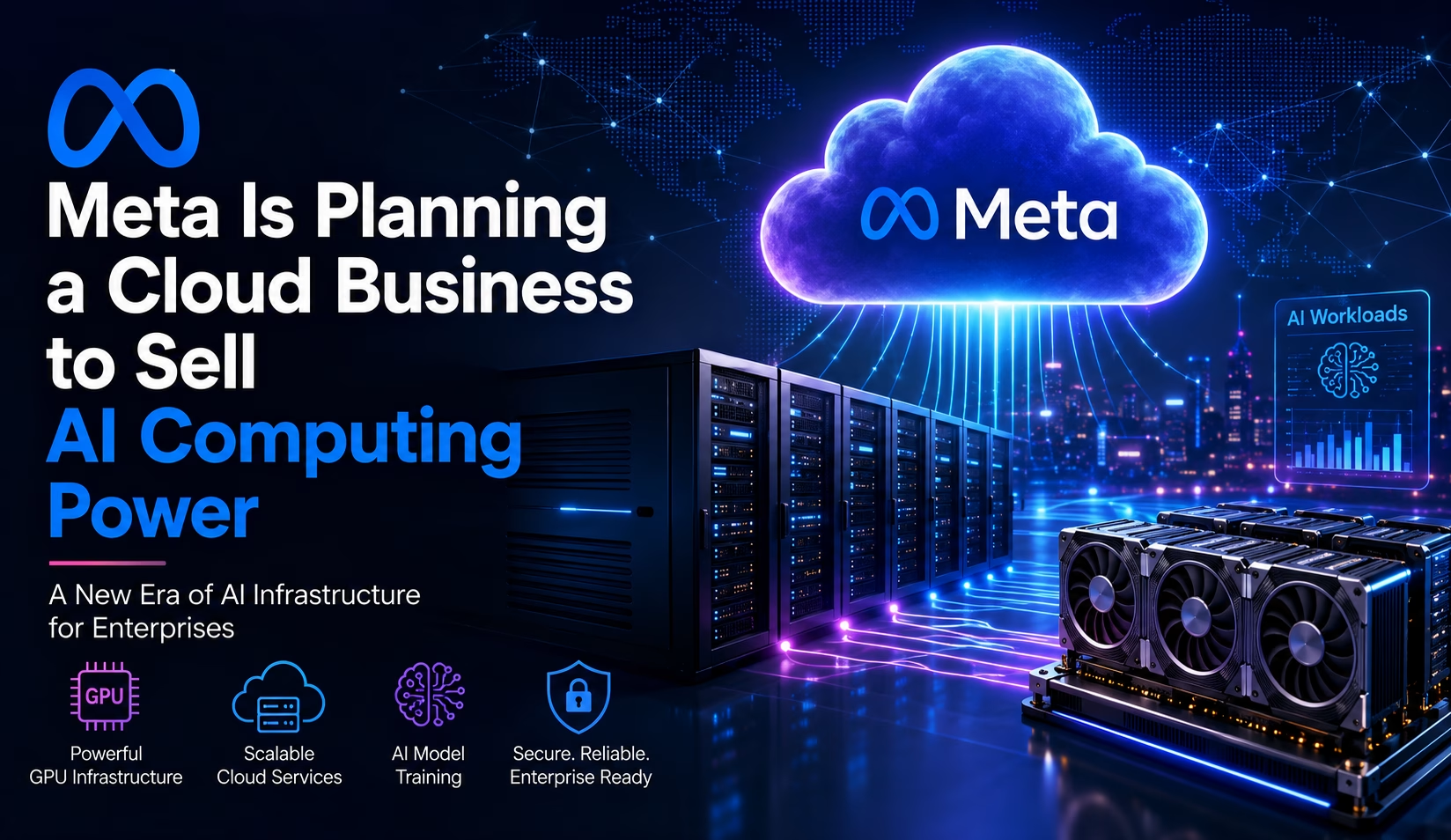
Artificial intelligence has entered a new era where computing power has become just as valuable as data. Organizations worldwide are racing to build AI models capable of solving complex business challenges, but the demand for Graphics Processing Units (GPUs) and high-performance AI infrastructure continues to outpace supply. Against this backdrop, Meta is reportedly preparing to enter the AI cloud computing market, positioning itself as a direct competitor to established cloud providers.
If successful, this strategic expansion could transform Meta from a social media powerhouse into one of the world’s leading AI infrastructure providers. For enterprises, developers, and technology leaders, this signals another major shift in how AI workloads may be deployed over the next decade.
The Growing Demand for AI Compute
Modern AI models require enormous computational resources for both training and inference. Whether organizations are developing large language models (LLMs), computer vision systems, or generative AI applications, they require thousands of GPUs operating together in highly optimized environments.
Current cloud providers such as Amazon Web Services (AWS), Microsoft Azure, and Google Cloud dominate this market. However, increasing demand has created GPU shortages, higher operational costs, and longer provisioning times.
Meta has already invested tens of billions of dollars into AI infrastructure to support products including:
- Meta AI
- Facebook recommendation systems
- Instagram personalization
- WhatsApp AI assistants
- Llama open-source AI models
Instead of using this infrastructure solely for internal development, Meta is reportedly exploring opportunities to commercialize excess computing capacity through cloud services.
Why Meta Is Entering the AI Cloud Market
Unlike traditional cloud providers that built infrastructure for general computing, Meta has spent years optimizing systems specifically for AI.
Its internal infrastructure already supports:
- Massive GPU clusters
- High-speed AI networking
- Distributed model training
- Large-scale inference
- Custom AI optimization tools
Opening these capabilities to external customers could create an entirely new revenue stream while maximizing utilization of its growing AI data centers.
This strategy also reduces dependence on advertising revenue, helping Meta diversify its business as AI becomes central to digital transformation.
Competing with Established Cloud Giants
Entering the cloud business is not a simple expansion.
Meta would compete directly against companies that have spent decades building enterprise cloud ecosystems.
Major competitors include:
- Amazon Web Services (AWS)
- Microsoft Azure
- Google Cloud Platform
- Oracle Cloud Infrastructure
- IBM Cloud
- CoreWeave
- NVIDIA DGX Cloud
However, Meta possesses several competitive advantages.
1. AI-First Infrastructure
Rather than focusing on traditional virtual machines and storage, Meta can build cloud services optimized specifically for AI development.
Organizations increasingly need GPU clusters—not generic servers.
2. Open-Source Leadership
Meta’s Llama family of models has become one of the most widely adopted open-source AI platforms.
Offering cloud services designed specifically around Llama could accelerate enterprise adoption.
3. Massive Data Center Investments
Meta continues investing billions into next-generation AI data centers designed to support future AI workloads.
These facilities include advanced networking, liquid cooling technologies, and high-density GPU deployments.
What Services Could Meta Offer?
Although official product details remain limited, an AI-focused cloud platform could include:
GPU-as-a-Service
Organizations could rent powerful GPU clusters without purchasing expensive hardware.
AI Model Training
Businesses could train custom foundation models using scalable infrastructure.
Model Inference
Applications could deploy AI models globally with low-latency inference capabilities.
Llama AI Platform
Native hosting, fine-tuning, and deployment services for Meta’s open-source Llama models.
AI Development Tools
Integrated environments supporting machine learning pipelines, model evaluation, and performance optimization.
Enterprise APIs
Secure APIs enabling businesses to integrate advanced AI into existing applications.
Why This Matters for Enterprises
Many organizations struggle to access affordable AI computing resources.
Meta entering this market may increase competition, leading to:
- Lower AI infrastructure costs
- More GPU availability
- Faster AI deployment
- Greater innovation
- Increased cloud flexibility
- Improved enterprise AI adoption
Businesses would also gain another option beyond the existing hyperscale providers, reducing vendor lock-in.
Challenges Meta Must Overcome
Building an enterprise cloud platform requires more than powerful hardware.
Meta must demonstrate:
Enterprise Security
Large organizations require strict identity management, compliance certifications, encryption, and governance.
Reliability
Cloud platforms demand near-perfect uptime with global redundancy.
Customer Support
Enterprise customers expect 24/7 technical support and solution architecture guidance.
Regulatory Compliance
Meeting standards such as GDPR, HIPAA, ISO 27001, SOC 2, and regional data residency requirements will be essential.
Enterprise Trust
Many organizations still primarily associate Meta with consumer platforms rather than mission-critical enterprise infrastructure.
Changing this perception will take time.
Implications for AI Innovation
More AI cloud providers mean greater access to computational resources.
This could accelerate innovation across industries including:
- Healthcare
- Financial Services
- Manufacturing
- Telecommunications
- Cybersecurity
- Retail
- Education
- Government
Small startups may also benefit by gaining affordable access to enterprise-grade AI infrastructure without investing millions in GPU hardware.
The Role of AI Infrastructure in Digital Transformation
AI is rapidly becoming the foundation of modern enterprise software.
Organizations are moving beyond experimentation toward production-scale AI systems that require resilient, scalable, and secure infrastructure.
Future success will depend not only on AI algorithms but also on the availability of powerful computing platforms capable of supporting continuous model training and real-time inference.
As demand continues to rise, infrastructure providers that deliver scalable AI compute with enterprise-grade reliability will play a critical role in shaping the next generation of digital transformation.
What This Means for Cybersecurity
AI cloud infrastructure also introduces new security considerations.
Organizations deploying sensitive AI workloads should evaluate:
- Data privacy protections
- Identity and access management
- Zero Trust architecture
- Secure model deployment
- Network segmentation
- AI governance
- Continuous threat monitoring
- Supply chain security
Providers that combine scalable AI infrastructure with strong cybersecurity practices will be best positioned to earn enterprise trust.
Looking Ahead
Meta’s reported plans to launch an AI cloud business highlight the growing importance of computing infrastructure in the AI economy. As organizations accelerate their adoption of machine learning and generative AI, demand for scalable, secure, and high-performance compute will only increase.
For enterprises, greater competition in AI cloud services could mean improved access to advanced infrastructure, more flexible deployment options, and potentially lower costs. For the broader technology industry, it reflects a shift where AI computing power is becoming a strategic service rather than merely an internal capability.
Whether Meta can establish itself alongside today’s leading cloud providers remains to be seen, but its investments in AI hardware, open-source innovation, and global infrastructure suggest it intends to be a significant player in the evolving AI cloud landscape.
Conclusion
The future of enterprise AI depends on access to scalable computing resources. Meta’s move toward commercial AI cloud services represents more than a business expansion—it reflects the industry’s transition toward AI-first infrastructure. As competition intensifies among cloud providers, organizations can expect continued innovation, improved performance, and broader access to the computational power required to build the next generation of intelligent applications.
For businesses planning long-term AI strategies, now is the time to evaluate infrastructure choices that prioritize security, scalability, resilience, and operational efficiency. Providers such as ibm/SEIMless help organizations modernize their networking, cybersecurity, and cloud environments, ensuring they are prepared to leverage advanced AI platforms as the technology landscape continues to evolve.