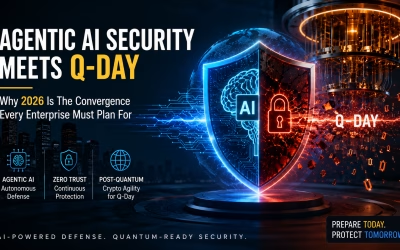
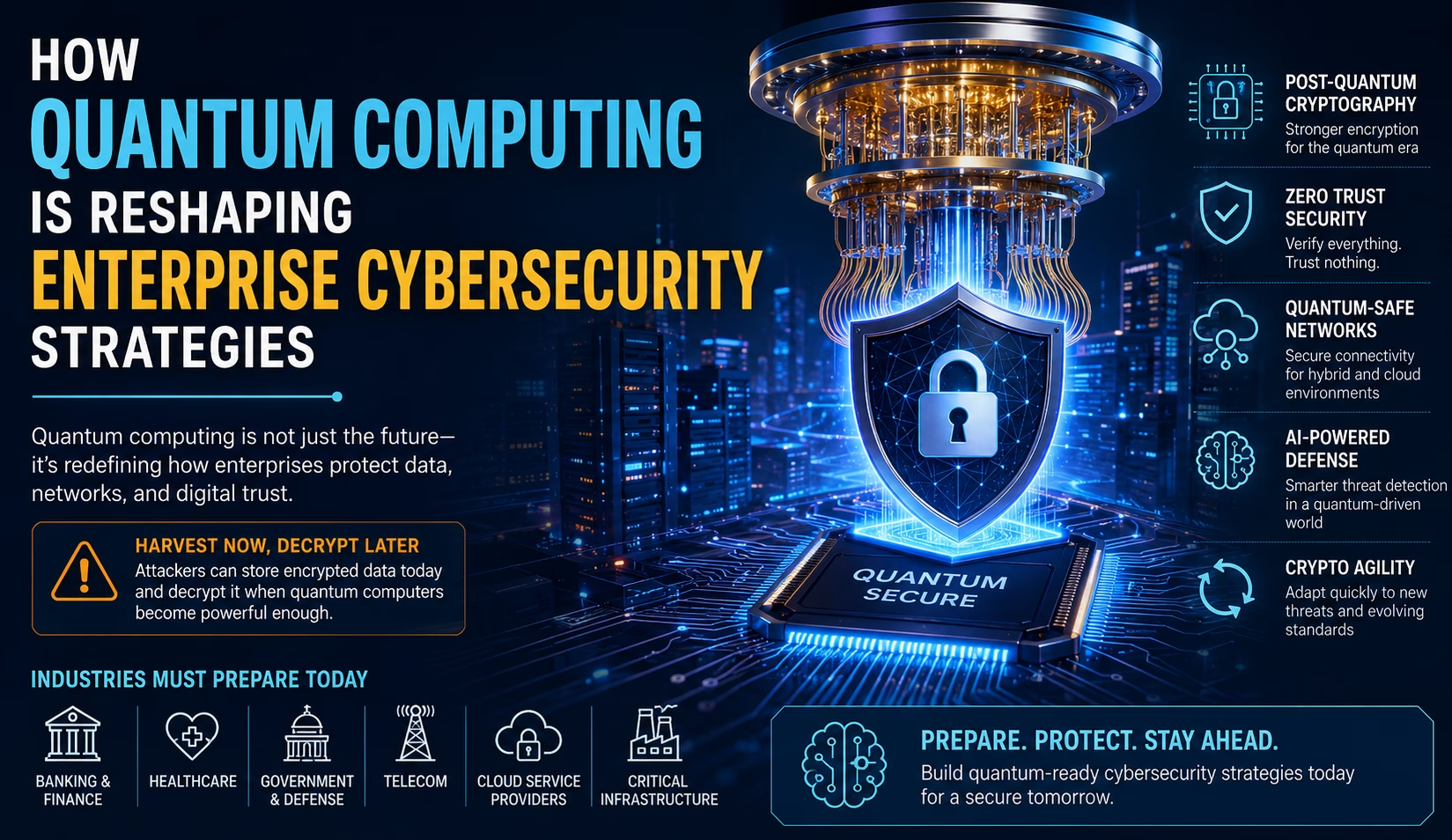
Quantum computing is changing cybersecurity strategy long before most organizations deploy a cryptographically relevant quantum computer. The reason is simple: the encryption protecting enterprise data, identities, VPNs, code-signing workflows, and digital trust systems is built on mathematical assumptions that quantum machines are expected to weaken or break at scale. NIST says its Post-Quantum Cryptography project exists to protect electronic information against that future threat, because quantum computers could eventually break many widely used cryptographic systems.
For enterprises, that means quantum risk is not only a future problem. It is also a present-day migration problem. Sensitive data captured today may remain valuable for years, which is why NIST explicitly highlights “harvest now, decrypt later” as a real concern and urges organizations to begin transitioning now.
Why enterprise security teams are rethinking the stack
Most enterprise security programs still depend on public-key cryptography for key exchange, authentication, and trust chaining. As quantum capabilities progress, the strategic response is shifting toward post-quantum cryptography, or PQC. NIST finalized its first three PQC standards in August 2024: FIPS 203, FIPS 204, and FIPS 205. Those standards introduced ML-KEM for key establishment, ML-DSA for digital signatures, and SLH-DSA as a hash-based signature option.
That standardization matters because it gives enterprises a concrete migration target instead of a vague research horizon. Security teams can now map systems to approved post-quantum algorithms, prioritize the most exposed assets, and plan upgrades in phases rather than waiting for a crisis. NIST’s NCCoE migration guidance says organizations need to identify quantum-vulnerable public-key algorithms across hardware, software, and services, then build roadmaps that prioritize the new NIST algorithms.
The biggest strategic shift: from static cryptography to crypto agility
Quantum readiness is not just about swapping RSA or ECC for a new algorithm. It is about building crypto agility into the enterprise so cryptographic methods can be updated without reengineering the entire environment. That includes applications, APIs, cloud connections, certificate management, identity systems, embedded devices, and vendor dependencies. ibm’s quantum-safe guidance frames the transition as a structured program, not a single replacement project, and emphasizes that organizations should prepare now for harvest-now-decrypt-later risks.
This is where many enterprises underestimate the work. Encryption is often buried deep in legacy systems, third-party integrations, and operational technology. CISA’s post-quantum initiative exists specifically to bring government and industry together around those risks, and CISA’s recent product-category guidance was created to help accelerate PQC adoption across hardware and software categories.
What changes in the enterprise security roadmap
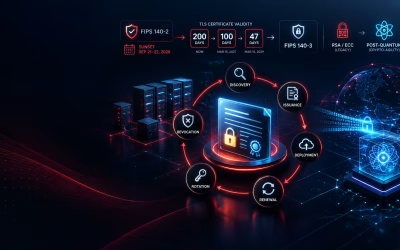
The first practical step is a cryptographic inventory. Security teams need to know where key exchange, signatures, certificates, and encrypted channels are used. That includes TLS, VPNs, email security, code signing, remote access, backup systems, and long-lived archives. Once those dependencies are visible, the team can decide which systems need immediate remediation and which can be moved on the next lifecycle cycle. NIST’s migration materials specifically recommend understanding where quantum-vulnerable algorithms are used and developing a prioritized roadmap.
The second shift is to make identity and authentication quantum-ready. Enterprises often focus on data-at-rest encryption first, but authenticated communications and digital signatures are equally important. That is why NIST’s finalized PQC standards include signature algorithms, and why NSA’s CNSA 2.0 guidance states that its quantum-resistant algorithms are intended to be secure against both classical and quantum computers and will eventually be required for National Security Systems.
The third shift is network and transport modernization. TLS, IPsec, and secure messaging are central to enterprise trust. Cloudflare’s post-quantum work shows how vendors are already rolling out hybrid and post-quantum protections across large-scale internet infrastructure, and Cloudflare says it is targeting 2029 for full post-quantum security across its platform. That is a strong signal that enterprise networking roadmaps are already being rewritten around PQC readiness.
Where the business risk is highest
Quantum threats are especially important for industries that handle long-lived sensitive data: financial services, healthcare, government, telecom, defense, cloud providers, and critical infrastructure. In these sectors, data often has a secrecy lifetime measured in decades, not months. That is exactly why “harvest now, decrypt later” is so dangerous: encrypted records captured today may still be valuable when quantum decryption becomes practical.
This also changes procurement. Enterprises can no longer treat post-quantum support as a nice-to-have feature. It becomes a vendor-selection criterion. Security, architecture, and procurement teams should ask whether products support PQC roadmaps, whether certificate systems are crypto-agile, and whether signing, key exchange, and secure channel negotiation can be upgraded without major service disruption. That is the operational meaning of quantum readiness.
A practical enterprise response plan
A strong quantum security strategy usually starts with five moves:
First, inventory every cryptographic dependency across the estate.
Second, classify data by secrecy lifetime so the longest-lived assets receive priority.
Third, introduce crypto agility into applications, infrastructure, and vendor contracts.
Fourth, pilot the NIST-approved PQC standards in low-risk environments before broad rollout.
Fifth, align security, compliance, procurement, and engineering around one migration roadmap.
The organizations that move early gain more than technical protection. They gain time. PQC migration is a multi-year program, and the enterprises that start now are far less likely to face rushed, expensive, and error-prone replacements later. That is why NIST, CISA, and NSA have all pushed public guidance, standardization, and transition planning rather than waiting for the technology to mature further.
(FAQs)
1. What is quantum computing, and why is it a cybersecurity concern?
Quantum computing is an advanced computing technology that uses quantum bits (qubits) to perform complex calculations much faster than traditional computers. While it has the potential to solve scientific and business challenges, it also threatens current encryption methods such as RSA and ECC, which protect sensitive enterprise data. This is why organizations are preparing for quantum-resistant cybersecurity solutions.
2. What is Post-Quantum Cryptography (PQC)?
Post-Quantum Cryptography (PQC) refers to cryptographic algorithms designed to remain secure against attacks from both classical and quantum computers. The U.S. National Institute of Standards and Technology (NIST) has standardized several PQC algorithms that organizations can begin implementing to safeguard long-term sensitive information and prepare for the quantum era.
3. What is the “Harvest Now, Decrypt Later” (HNDL) threat?
“Harvest Now, Decrypt Later” is a cybersecurity strategy where attackers steal encrypted data today and store it until powerful quantum computers become capable of decrypting it in the future. This makes long-term confidential information—such as financial records, healthcare data, intellectual property, and government communications—particularly vulnerable if organizations delay adopting quantum-safe encryption.
4. How can enterprises prepare for quantum-safe cybersecurity?
Organizations should begin by identifying where cryptography is used across their IT infrastructure, including VPNs, cloud applications, databases, digital certificates, APIs, and communication systems. They should then develop a migration roadmap to NIST-approved Post-Quantum Cryptography, implement crypto-agile architectures, strengthen Zero Trust security models, and work with technology vendors that support quantum-resistant solutions.
5. Which industries are most affected by quantum computing security risks?
Industries that manage highly sensitive or long-lived data face the greatest quantum security risks. These include banking and financial services, healthcare, telecommunications, government agencies, defense organizations, cloud service providers, critical infrastructure, energy companies, and insurance firms. These sectors should prioritize quantum readiness to protect data against future decryption attacks and maintain regulatory compliance.
Conclusion
Quantum computing is reshaping enterprise cybersecurity strategies by forcing a transition from today’s static trust model to a future of quantum-safe, crypto-agile, and inventory-driven security operations. The shift is already underway. NIST has finalized its first PQC standards, CISA is coordinating industry readiness, NSA has published quantum-resistant requirements, and major infrastructure providers are moving ahead with post-quantum deployments.
For enterprises, the right response is not panic. It is preparation: discover what is vulnerable, protect what matters most, and build a cryptographic foundation that can survive the next generation of computing.
Contact Us | Our Blog | Our Services | Previous Post…
#ibmseimless #ibmSEIMless #QRN