North Korean IT worker fraud stopped being an abstract HR worry on October 13, 2026. That Tuesday, the Justice Department announced coordinated actions against the scheme: 14 people charged, two arrests, and about 187 laptops and KVM devices seized from more than 40 Texas homes suspected of serving as laptop farms. The Ohio indictment says the conspiracy placed overseas operatives in jobs at more than 70 U.S. companies from 2019 through mid-2025 and produced roughly $3 million in wages for a sanctioned regime.
For enterprise leaders, the raid is not the headline. The pattern underneath it is. The workers never had to defeat a firewall. They were interviewed, hired, shipped company hardware, and issued credentials by the same processes every business uses for its best new engineer. This guide breaks down what prosecutors and the FBI revealed, why the threat keeps adapting, and seven controls that close what we call the presence gap. It also connects to our earlier reporting on fake resumes used to steal enterprise credentials.
Definition: North Korean IT worker fraud is a state-run scheme in which North Korean operatives use stolen or fabricated identities, U.S.-based facilitators, and laptop farms to get hired for remote technology jobs, then send wages, and sometimes stolen data, to Pyongyang in violation of U.S. sanctions. Security researchers track the operators as Famous Chollima, Jasper Sleet, and WageMole.
Key Takeaways
- The DOJ charged 14 people and seized about 187 devices in Operation Lonestar Roundup, with raids on Texas homes from September 21 to 25, 2026.
- CrowdStrike expects the disruption to have only a short-lived local effect, because operators adapt quickly.
- The FBI now reports freelancer subcontracting, paid U.S. helpers, and threats against former managers.
- Treasury says OFAC can penalize sanctions violations on a strict liability basis, so unknowing payroll can still create exposure.
- Defense is layered: live identity checks, hardware controls, endpoint detection, zero trust access, and payroll monitoring.
North Korean IT Worker Fraud: What the DOJ Announced
Two coordinated actions landed the same day. In the Northern District of Texas, the FBI’s Dallas Field Office ran Operation Lonestar Roundup, searching more than 40 residences between September 21 and 25 and seizing about 187 laptops and KVM (keyboard, video, mouse) devices, according to the DOJ release. About 100 of those devices were recovered in North Texas, Defense One reported. FBI Dallas’s special agent in charge, R. Joseph Rothrock, said, “Each laptop seized potentially represents one company that has hired a DPRK IT worker.”
In the Northern District of Ohio, prosecutors unsealed an indictment charging 12 named defendants, ten of them in China and two Americans, plus two unnamed defendants. The Hacker News lists the counts as wire fraud conspiracy, money laundering conspiracy, conspiracy to commit identity theft, and aggravated identity theft. The two U.S. nationals, Michael James Bostelle and Juan Cecilio Pena Carrillo, were arrested; SentinelOne notes the other twelve defendants remain at large. All are presumed innocent until proven guilty.
The indictment is specific about how individual facilitators allegedly operated. CyberScoop reports that co-conspirator Trey Michael Nolte, named but not charged, allegedly kept about two dozen company laptops online, installed remote-access software, and moved more than $320,000 through accounts opened under false names. Carrillo allegedly hosted laptops at home and received about $190,000 from five employers. Prosecutors also say false employment records were filed with DHS, the IRS, and the Social Security Administration in the names of more than 25 identity theft victims.
How North Korean IT Worker Fraud Works Inside a Laptop Farm
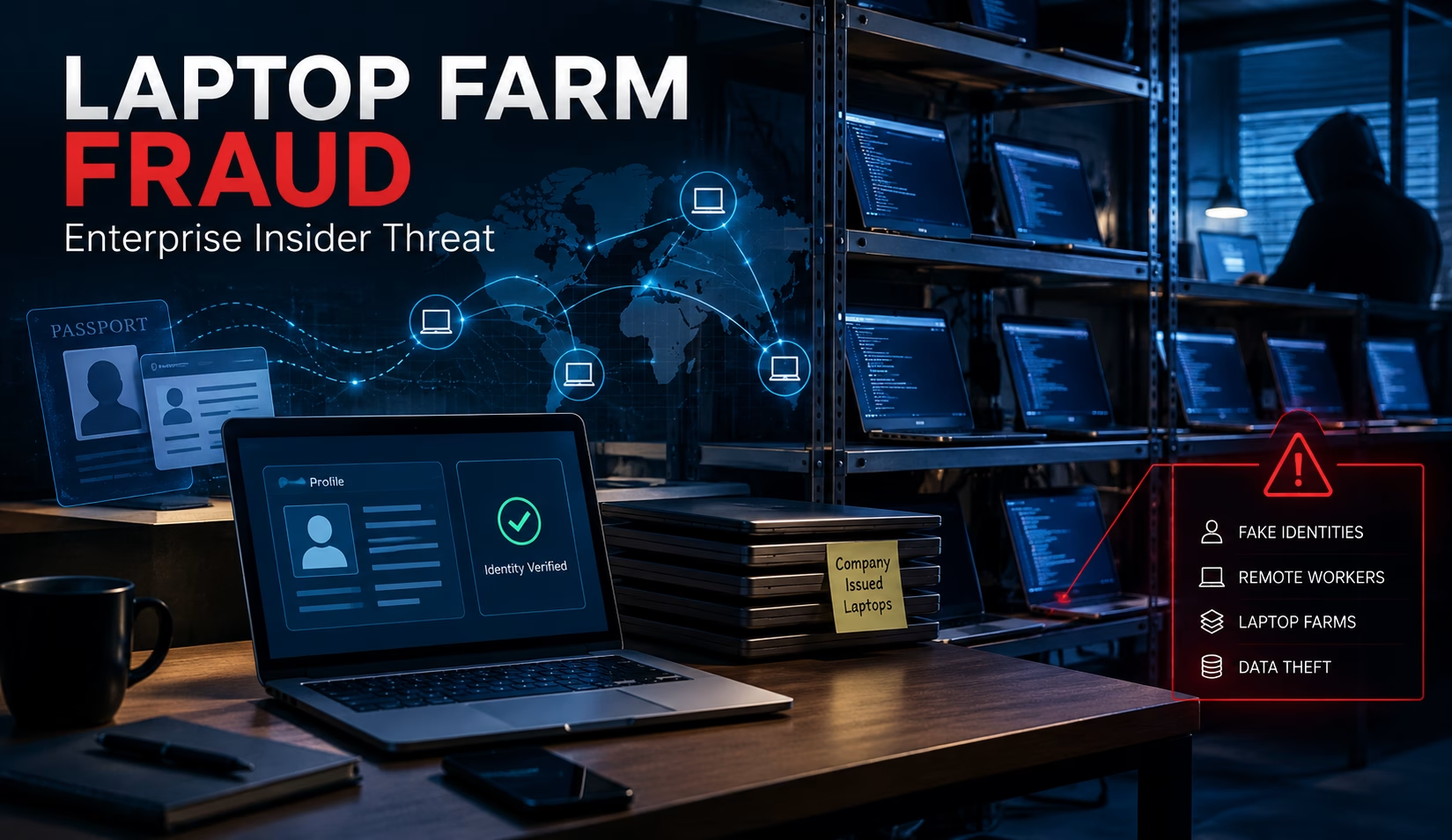
A laptop farm is the physical engine of North Korean IT worker fraud: a home or small office where a U.S. facilitator receives employer-issued computers and keeps them powered on, connected, and reachable. The overseas worker logs in remotely, so the employer sees a U.S. device on a U.S. home network. CrowdStrike, which assisted the FBI, describes the farm as a rented U.S. footprint: a physical address, a legal identity, and a way to satisfy know-your-client checks.
The Hardware Trick
CrowdStrike says operatives filed fake police reports claiming a laptop was stolen so the employer would ship a replacement to a farm address. Others claimed last-minute relocations to divert devices mid-shipment, or got hired through IT staffing firms that unknowingly forwarded client devices to farm infrastructure. Since at least May 2026, the group has also spoofed device hashes, for example making a video capture card look like a webcam, as The Hacker News summarized.
The Money Trail
North Korean IT worker fraud only pays if the money moves. Facilitators open U.S. bank and payment accounts, receive salary payments, and pass the funds along for a fee. Help Net Security reports that the regime is estimated to capture 85 to 90 percent of what the workers earn. Treasury’s March 2026 sanctions announcement tied these networks to nearly $800 million in 2024 revenue for North Korea’s weapons programs, with facilitators operating from North Korea, Vietnam, Laos, and Spain.
The Presence Gap: Why Your Records Cannot Tell You Where Work Happens
We use the term presence gap for the distance between where a worker appears to be and where their keystrokes actually originate. Your HR file says Austin. The device sits in Austin. The IP address is a residential Austin connection. None of that proves the person typing is in Austin, or is the person you interviewed.
Laptop farms exist to make North Korean IT worker fraud look like ordinary remote employment. Every conventional signal is genuine and every conclusion drawn from it is wrong. That is why the FBI told employers, as CyberScoop summarized, that no single warning sign catches these workers and that layered checks across the entire employment lifecycle are needed.
| What your records show | What may be true |
| U.S. home address, shipped laptop | Farm address run by a paid facilitator |
| Residential U.S. IP address | Remote-control session from overseas through the farm |
| Clean video interview | Stand-in interviewer, face-swapped photo, or voice changer |
| Valid Social Security number | Stolen or rented identity of a real American |
| Normal U.S. bank deposit | Pass-through account feeding sanctioned entities |
Why North Korean IT Worker Fraud Keeps Evolving in 2026
CrowdStrike was blunt about the limits of the raids. Disrupting a farm will likely slow Famous Chollima mainly in the places where farms were shut down, and the group will almost certainly keep changing methods. The FBI’s October 13 public service announcement shows how.
- Freelancer subcontracting. North Koreans take Western jobs, then pay freelancers in places such as Pakistan, India, and Nigeria to do the actual work for a fraction of the salary.
- Paid U.S. helpers. Operators pay Americans to appear in interviews, take drug tests, access accounts, and keep laptops running, and they target people under financial strain.
- The FBI documented threats against former managers and their families to extort payment, an escalation beyond quiet fraud.
- Higher-value targets. The FBI says operators pursue cleared defense contractors, government contractors, and even active-duty service members willing to host laptops.
Artificial intelligence compounds all of this. Microsoft’s Jasper Sleet research documents stolen identity documents and AI-enhanced photos, and Microsoft later reported face-swapping tools inserting operators’ faces into stolen documents. See also how the scheme funds Russia’s war effort and the allied WaterPlum warning. The related shadow AI playbook explains why unmanaged AI tools make worker impersonation even harder to spot.
Why North Korean IT Worker Fraud Is a Network and Endpoint Problem
Hiring teams cannot stop North Korean IT worker fraud alone, and the reason is architectural. The moment an operator holds a valid employee account on a managed laptop, the threat looks like a normal insider. The FBI data breach analysis we published in September showed the same dynamic from the other side: HR systems are intelligence targets, and compromised or counterfeit identities travel through them.
The network edge security lesson applies: when access arrives through a trusted path, only behavior and device evidence reveal the problem. Exfiltrated data also supports harvest now, decrypt later strategies, because stolen archives can be stored by a state actor and opened when quantum capability matures.
Sanctions and Legal Exposure for Unwitting Employers
Employers facing North Korean IT worker fraud also face a legal question. Treasury’s March 2026 notice states that OFAC may impose civil penalties for sanctions violations on a strict liability basis. In plain terms, not knowing you paid a sanctioned worker is not a complete defense. The original 2022 State, Treasury, and FBI advisory lists red flags and due diligence measures, and the FBI’s January 2025 alert on data extortion shows how fired workers can turn hostile.
The FBI also warned that blunt filters would screen out qualified applicants. Do not profile by nationality or ethnicity. Build checks around evidence of identity, device, location, and payment behavior, and have employment counsel review the program. The State Department’s Rewards for Justice program offers up to $5 million for information that disrupts the scheme.
Industry Impact of North Korean IT Worker Fraud on Finance, Healthcare, and Contractors
Financial services. North Korean IT worker fraud is a know-your-customer problem for the workforce. CrowdStrike’s point about know-your-client checks matters most here. A farm gives an operator a legitimate-looking U.S. footprint. Banks and insurers should map this threat to the NYDFS Part 500 cybersecurity regulation and to the access control and third-party provisions of NIST SP 800-53.
Healthcare. The DOJ listed health care among the industries hit by North Korean IT worker fraud. Workforce screening and access management obligations under the HIPAA Security Rule apply to every remote developer or administrator with access to patient data, and the Copilot oversharing permission-debt problem means a fraudulent hire may inherit far more data than their role needs.
Contractors and managed service providers. The FBI says operators seek positions at cleared defense contractors, and Nextgov recalled a prior case in which an overseas worker allegedly stole export-controlled data from a California defense contractor. Staffing firms and MSPs should treat client-device routing as a high-risk process.
Seven Defenses Against North Korean IT Worker Fraud
These controls address North Korean IT worker fraud at every stage, from the first interview to the last payroll run.
1. Verify identity live, at hire and again at privilege changes
Use attended video verification with document checks, and repeat it when someone receives privileged access or changes bank details. NIST SP 800-63A-4, finalized in July 2025, defines identity assurance levels and remote attended proofing that organizations can adapt for workforce onboarding.
2. Control where hardware goes
Ship only to addresses verified through a second channel. Treat any “stolen laptop” replacement request, last-minute relocation, or freight-forwarding address as a trigger for manual review. Write device-routing rules into staffing and MSP contracts.
3. Detect remote-control tooling and KVM patterns
Endpoint detection should flag unapproved remote-access software, virtual or capture-card webcams, and many sessions tied to one home network. Our EDR service approach pairs endpoint telemetry with network evidence.
4. Keep data off the laptop
Brokered virtual desktops move the control point from a farm-hosted machine to your environment, so you can record sessions, restrict downloads, and revoke access in one place. Evaluate Desktop-as-a-Service and the DaaS migration decision together.
5. Enforce zero trust on every session
Evaluate each session on device posture, behavior, and context rather than on network location, following NIST SP 800-207 and the CISA Zero Trust Maturity Model. Segment developer and finance environments so a single account cannot reach everything.
6. Watch payroll and vendor money flows
Alert on bank account changes, multiple workers paid into one account, name mismatches, and payments routed through unfamiliar staffing intermediaries. Finance and security should share one watch list.
7. Build a joint HR, IT, security, and legal playbook
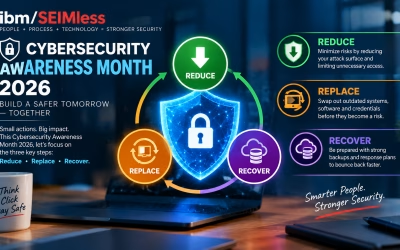
Map controls to the NIST Cybersecurity Framework 2.0 and the CISA insider threat mitigation resources. Rehearse the decision tree before you need it. The Cybersecurity Awareness Month action plan offers a 16-day sprint format you can reuse.
How ibm/SEIMless Helps Close the Presence Gap
ibm/SEIMless is a vendor-agnostic enterprise IT, networking, and security provider based at One Liberty Plaza in New York. Several of our NxT-Gen network security and quantum-resistant networking services map directly to the controls above.
- Zero Trust Content Security and the Exodus NxtGen Firewall enforce per-session policy and segmentation.
- Exodus Aria ADR supports anomaly detection and response across network behavior.
- EDR and Desktop-as-a-Service bring endpoint visibility and a controlled session point.
- Exodus Transparent Encryption, Data at Rest, and Data in Motion, with Exodus Key Management, limit what a malicious insider can read or move.
- SD-WAN, private and hybrid cloud, and Security-as-a-Service centralize control for distributed and remote teams.
Browse the full services catalog or read the AI agent botnet warning and AI safety culture posts for related identity and containment guidance.
If You Suspect North Korean IT Worker Fraud: First 72 Hours
- Do not confront the worker. Preserve logs, device images, video interviews, and payroll records first.
- Isolate quietly. Restrict access to sensitive systems and rotate secrets the person could reach.
- Involve counsel. Review sanctions exposure and what to say before any termination, given the FBI’s report of threats after firings.
- Contact your FBI field office and file with the Internet Crime Complaint Center.
- Follow your incident process. Use NIST SP 800-61 Rev. 3 to document scope and recovery.
Frequently Asked Questions
What is North Korean IT worker fraud?
It is a government-directed scheme where North Korean operatives obtain remote technology jobs using stolen or fabricated identities and U.S. facilitators, then send earnings to the regime in violation of sanctions. Some operators also steal data or extort employers.
What is a laptop farm?
A laptop farm is a location where a facilitator keeps employer-issued laptops powered on and connected so overseas workers can control them remotely and appear to be working from inside the United States.
How many companies were affected in the October 2026 case?
The Ohio indictment says more than 70 U.S. companies were affected between 2019 and 2025, generating about $3 million for the workers. The DOJ charged 14 people and seized about 187 devices in Texas.
How can employers spot a North Korean IT worker?
No single sign is reliable. Combine live identity verification, scrutiny of hardware shipment requests, endpoint and network monitoring for remote-control tools, and payroll anomaly checks, as the FBI recommends layered controls.
Can a company be liable for unknowingly paying one?
Treasury states OFAC may impose civil penalties on a strict liability basis, so unknowing payments can still create exposure. Consult sanctions counsel and document your due diligence.
What should I do if I suspect one?
Preserve evidence, limit access quietly, involve legal counsel, and report to your FBI field office and the Internet Crime Complaint Center before taking action that could tip off the worker.
Close the Presence Gap Before the Next Hire
ibm/SEIMless can assess your remote workforce access, endpoint visibility, and network controls, and design a zero trust plan against North Korean IT worker fraud that fits your business.
| Get Started | Contact Us |
Call: 646-546-5245
Email: in**@**********ss.com
Address: One Liberty Plaza, New York, NY 10006