How Artificial Intelligence Is Revolutionizing Global Communication Infrastructure
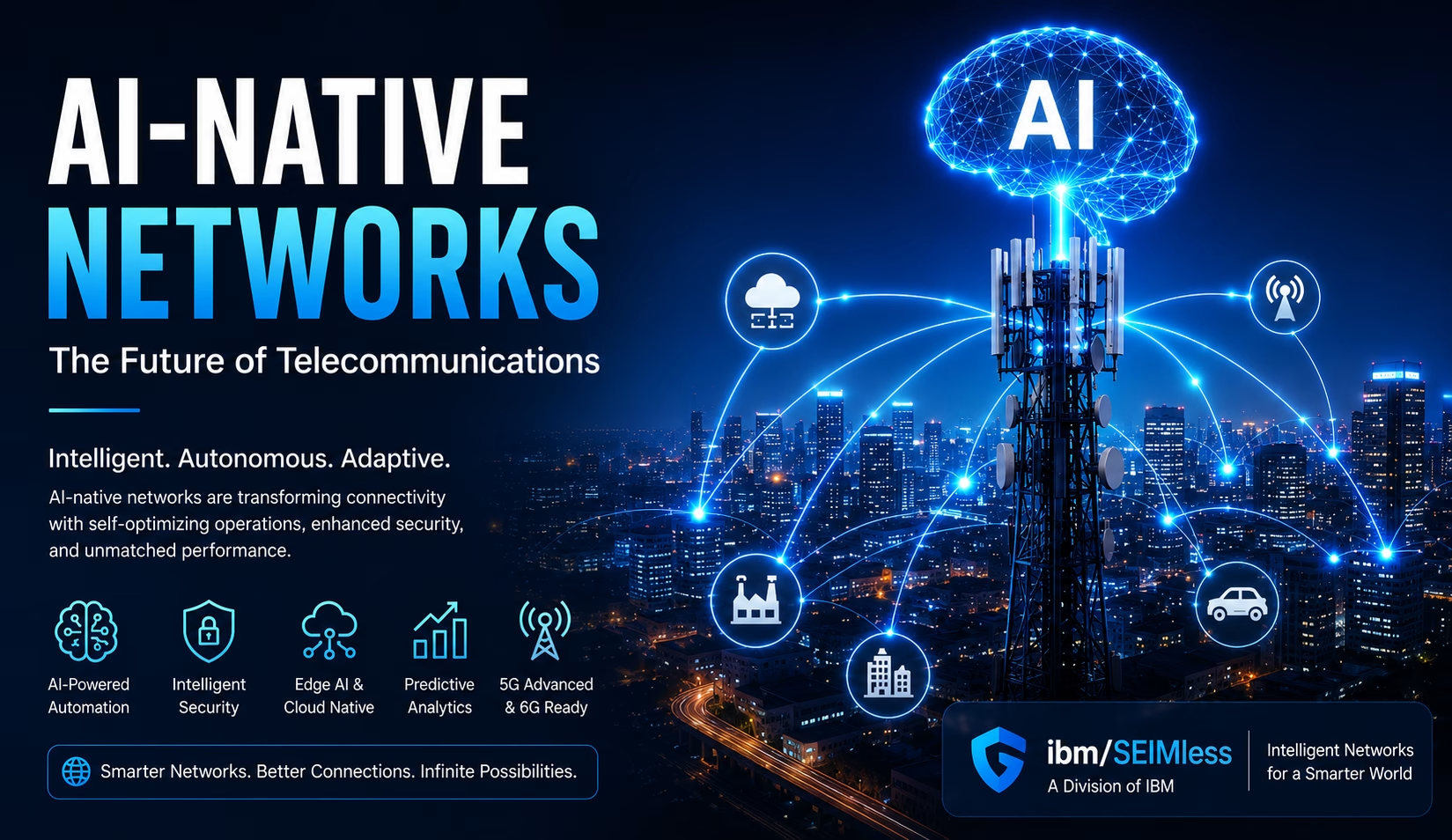
The telecommunications industry is entering a transformative era driven by Artificial Intelligence (AI). Traditional networks, designed primarily for connectivity, are evolving into intelligent ecosystems capable of learning, adapting, and optimizing themselves in real time. This new paradigm, known as AI-Native Networking, integrates AI into every layer of the network—from planning and deployment to operations, security, and customer experience.
As global data traffic continues to grow exponentially, fueled by cloud computing, IoT, autonomous vehicles, smart cities, immersive digital experiences, and billions of connected devices, conventional network architectures struggle to meet increasing demands. AI-native networks address these challenges by enabling predictive analytics, automated resource allocation, self-healing capabilities, intelligent security, and autonomous operations.
For enterprises, governments, telecom operators, and critical infrastructure providers, AI-native networking is not merely an upgrade—it is a strategic necessity. Organizations that adopt intelligent network architectures today will be better positioned to support 5G Advanced, emerging 6G technologies, quantum-safe communications, and next-generation digital services.
At ibm/SEIMless, we believe the future of telecommunications lies in secure, intelligent, autonomous, and resilient networking solutions. By combining advanced AI, cybersecurity, cloud-native infrastructure, and quantum-resistant technologies, businesses can create communication networks that are faster, more secure, and prepared for the digital challenges of tomorrow.
The Evolution of Telecommunications
Telecommunications has undergone remarkable transformation over the past four decades.
First Generation (1G)
The first generation of mobile communications introduced analog voice services. Although revolutionary at the time, 1G offered limited capacity, poor security, and low-quality voice transmission.
Second Generation (2G)
Digital communications arrived with 2G, enabling SMS messaging, improved voice quality, and stronger encryption. Mobile communication became more accessible and reliable for consumers worldwide.
Third Generation (3G)
The rise of smartphones brought the demand for mobile internet. 3G enabled web browsing, email, multimedia messaging, and early mobile applications, fundamentally changing how people interacted with digital services.
Fourth Generation (4G LTE)
4G transformed telecommunications by delivering high-speed broadband connectivity. Streaming media, cloud applications, remote collaboration, and mobile commerce flourished due to significantly improved network performance.
Fifth Generation (5G)
5G introduced ultra-low latency, massive device connectivity, network slicing, and enhanced mobile broadband. It created new opportunities for smart manufacturing, healthcare, autonomous transportation, industrial automation, and immersive technologies.
However, while 5G dramatically improved connectivity, managing increasingly complex network environments has become a major challenge. Millions of devices, distributed cloud environments, edge computing platforms, and growing cybersecurity threats require far more intelligent network management than traditional automation can provide.
What Are AI-Native Networks?
AI-native networks represent the next evolution of telecommunications. Unlike conventional networks where AI functions as an external management tool, AI-native networks embed artificial intelligence into the core architecture itself.
Every network component continuously learns from operational data, predicts future behavior, identifies anomalies, optimizes resources, and automatically responds to changing conditions without human intervention.
Rather than reacting to problems after they occur, AI-native networks anticipate issues before they impact users.
These intelligent systems leverage:
- Machine Learning
- Deep Learning
- Reinforcement Learning
- Large Language Models (LLMs)
- Predictive Analytics
- Digital Twins
- Edge AI
- Autonomous Decision Engines
- Intent-Based Networking
- Generative AI for Operations
Together, these technologies create networks capable of self-monitoring, self-optimizing, self-healing, and self-protecting.
Why Traditional Networks Are No Longer Enough
Modern telecommunications environments generate enormous volumes of operational data every second. Network engineers must manage:
- Billions of IoT devices
- Cloud-native applications
- Distributed edge infrastructure
- Hybrid multi-cloud environments
- Software-defined networking
- Virtualized network functions
- Massive cybersecurity threats
- Increasing customer expectations
Traditional monitoring systems rely heavily on manual intervention and predefined rules. This approach is no longer scalable.
Common challenges include:
- Unexpected service outages
- Network congestion
- Slow fault resolution
- Rising operational costs
- Complex security management
- Delayed capacity planning
- Inefficient resource utilization
AI-native networks address these limitations by enabling continuous learning and autonomous optimization, reducing downtime and improving overall service quality.
Core Characteristics of AI-Native Networks
1. Autonomous Operations
AI-native networks automate routine operational tasks such as configuration management, traffic engineering, software updates, and fault remediation. This minimizes human error and accelerates network responsiveness.
2. Predictive Intelligence
Instead of waiting for failures, AI models analyze historical and real-time telemetry to forecast equipment degradation, traffic surges, and potential outages. Operators can resolve issues proactively.
3. Self-Healing Infrastructure
When disruptions occur, AI-native systems automatically reroute traffic, isolate affected components, and restore services with minimal downtime, improving network resilience and customer satisfaction.
4. Intelligent Resource Allocation
AI dynamically allocates bandwidth, compute, and storage resources based on demand, ensuring efficient utilization and consistent application performance.
5. Built-In Security
Cybersecurity is integrated into the network fabric. AI continuously detects anomalies, identifies emerging threats, and initiates automated responses to mitigate risks before they escalate.
The Business Value of AI-Native Networks
Adopting AI-native networking delivers measurable benefits across industries:
- Reduced operational expenses through automation
- Improved network reliability and uptime
- Faster incident detection and resolution
- Enhanced customer experiences
- Greater scalability for future technologies
- Stronger cybersecurity posture
- Efficient energy consumption
- Accelerated service deployment
- Simplified network management
- Increased return on infrastructure investments
For telecom operators, enterprises, and public sector organizations, these advantages translate into improved competitiveness and long-term resilience.