How Modern Threat Actors Are Weaponizing Signed Drivers to Bypass Security Controls
In today’s evolving cybersecurity landscape, attackers are no longer relying solely on traditional malware techniques. A growing number of advanced persistent threat (APT) groups and ransomware operators are leveraging a tactic known as Bring Your Own Vulnerable Driver (BYOVD) to disable security controls, elevate privileges, and gain deep access into enterprise environments — all without requiring physical hardware manipulation.
At ibm/SEIMless, we continuously monitor emerging attack methodologies that threaten enterprise infrastructure, critical communication systems, and endpoint security frameworks. BYOVD has rapidly become one of the most dangerous kernel-level attack techniques because it abuses trusted, signed drivers already recognized by operating systems.
This article explores the BYOVD perspective, how vulnerable drivers become exploitable, the risks facing organizations, and the defensive strategies modern enterprises should implement immediately.
What Is BYOVD (Bring Your Own Vulnerable Driver)?
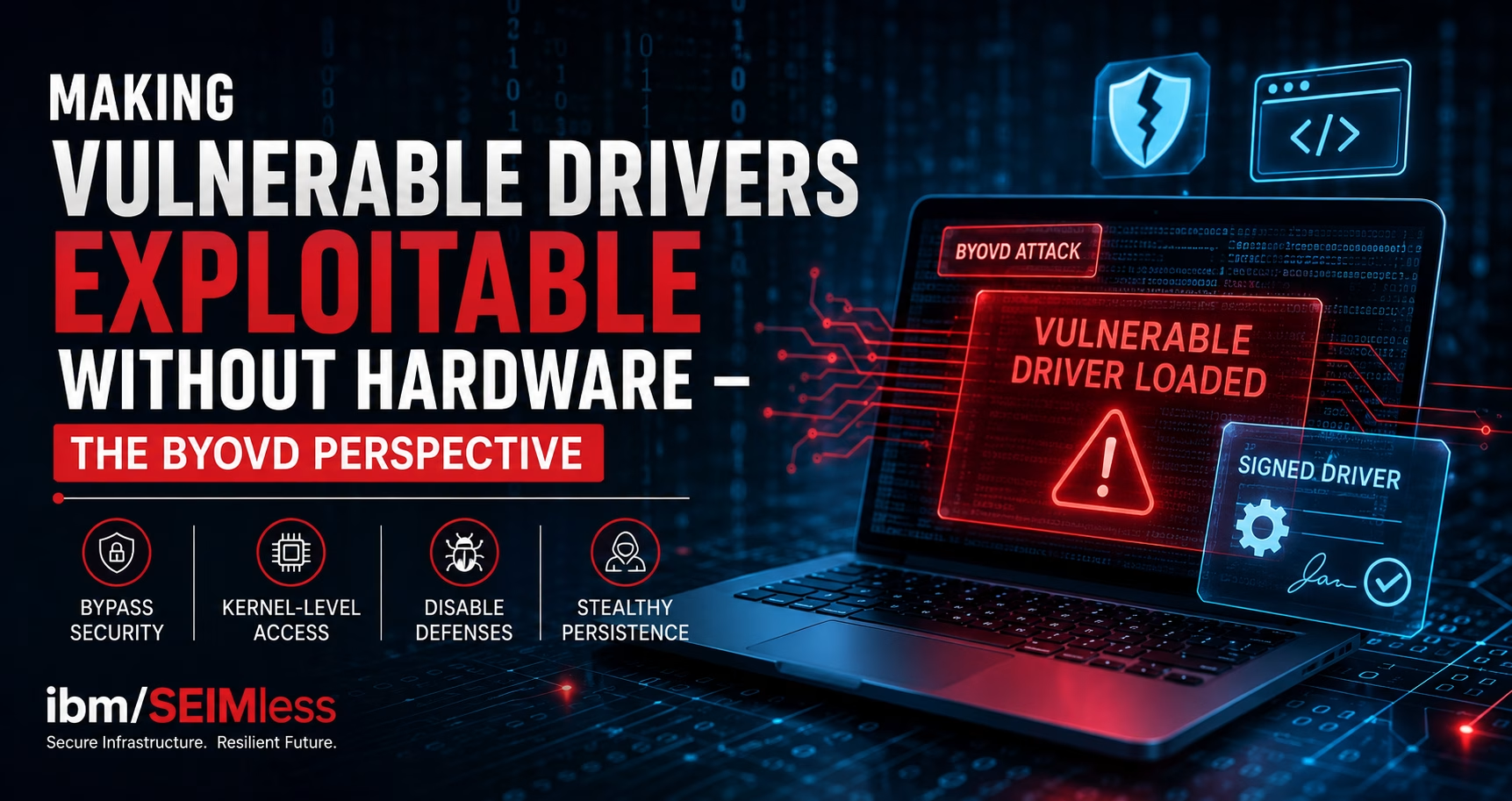
BYOVD is a cyberattack technique where attackers intentionally install a legitimately signed but vulnerable driver onto a target system. Once loaded into the Windows kernel, the vulnerable driver provides attackers with privileged access capable of bypassing endpoint security protections.
Unlike traditional exploits that depend on unpatched operating systems or hardware vulnerabilities, BYOVD attacks exploit weaknesses inside trusted third-party drivers.
These drivers are often:
- Digitally signed and trusted by Windows
- Previously used by legitimate vendors
- Vulnerable due to insecure kernel memory operations
- Capable of disabling security tools at kernel level
The dangerous aspect of BYOVD is trust abuse. Since the driver is signed and appears legitimate, many operating systems initially allow it to load without triggering immediate suspicion.
Why Attackers Prefer Vulnerable Drivers
Modern endpoint protection systems have become increasingly effective at detecting conventional malware. To evade these defenses, attackers now operate closer to the operating system kernel.
BYOVD techniques provide several advantages:
Kernel-Level Privilege Escalation
Attackers gain direct access to low-level system functions, allowing them to manipulate processes, memory, and security components.
Security Tool Neutralization
Many vulnerable drivers allow the termination or disabling of:
- Endpoint Detection & Response (EDR)
- Antivirus engines
- Kernel monitoring systems
- Memory integrity protections
Reduced Detection Rates
Since the driver itself is legitimate and signed, security solutions may initially trust its execution.
Persistence and Stealth
Kernel access enables attackers to establish long-term persistence while remaining difficult to detect using user-mode monitoring tools.
How BYOVD Attacks Work
A typical BYOVD attack chain includes several stages:
1. Initial Access
Attackers gain access through phishing, credential theft, exposed services, or malware deployment.
2. Driver Deployment
A vulnerable signed driver is dropped onto the system and loaded into kernel space.
3. Exploitation
The attacker interacts with the vulnerable driver using crafted I/O control requests (IOCTLs) to execute privileged operations.
4. Security Bypass
Security software is disabled or tampered with, opening the system for deeper compromise.
5. Payload Execution
Ransomware, credential theft modules, persistence implants, or lateral movement tools are deployed.
Real-World Rise of BYOVD Threats
BYOVD is no longer theoretical. Security researchers have observed ransomware groups and sophisticated threat actors actively weaponizing vulnerable drivers in enterprise attacks.
Common trends include:
- Abuse of old hardware utility drivers
- Exploitation of gaming anti-cheat drivers
- Use of vulnerable motherboard or firmware utilities
- Deployment of legacy monitoring drivers with insecure memory access
Attackers specifically target drivers capable of arbitrary kernel memory read/write operations because they enable unrestricted system control.
Why Traditional Security Is Struggling
Conventional endpoint security solutions primarily monitor user-mode activity. BYOVD bypasses these protections by operating directly inside the kernel.
This creates several challenges:
| Security Challenge | BYOVD Impact |
|---|---|
| Trusted driver loading | Appears legitimate |
| Kernel execution | Evades user-mode monitoring |
| Signed certificates | Reduces suspicion |
| Direct memory access | Enables deep tampering |
| Security service termination | Disables defenses before detection |
Organizations relying solely on signature-based detection remain highly exposed.
Defensive Strategies Against BYOVD Attacks
Organizations must adopt layered kernel-aware defenses to mitigate BYOVD risks effectively.
Implement Driver Blocklists
Microsoft maintains vulnerable driver blocklists that should remain continuously updated across enterprise systems.
Enable Memory Integrity Protections
Features such as Hypervisor-Protected Code Integrity (HVCI) help prevent unauthorized kernel modifications.
Monitor Driver Loading Events
Security teams should continuously analyze:
- Unsigned or unusual driver loads
- Legacy hardware utility installations
- Abnormal kernel activity
- Unauthorized service creation
Maintain Aggressive Patch Management
Outdated third-party drivers significantly increase attack exposure.
Deploy Behavioral Threat Detection
Behavioral analytics can identify suspicious privilege escalation and kernel tampering patterns before full compromise occurs.
Apply Zero Trust Principles
Restrict administrative privileges and enforce strict execution policies across endpoints and servers.
The Strategic Importance of Kernel Security
As threat actors evolve, kernel-level security is becoming essential for enterprise cyber resilience. BYOVD demonstrates how trusted software components can become offensive tools when supply-chain trust is abused.
Future cybersecurity strategies must prioritize:
- Driver integrity verification
- Hardware-assisted isolation
- Runtime behavioral analysis
- Secure boot enforcement
- Continuous kernel telemetry monitoring
Organizations that fail to modernize endpoint defense architectures risk becoming vulnerable to increasingly stealthy attacks.
How ibm/SEIMless Helps Enterprises Reduce Advanced Threat Exposure
At ibm/SEIMless, we help organizations strengthen their cybersecurity posture through advanced communication security, resilient infrastructure strategies, and next-generation threat awareness initiatives.
Our approach focuses on:
- Advanced enterprise security architectures
- Secure communications infrastructure
- Threat intelligence integration
- Vulnerability risk reduction
- Critical systems protection
- Zero trust security alignment
As cyber threats continue moving deeper into system architecture layers, organizations require proactive defense strategies capable of identifying and mitigating modern attack vectors before exploitation occurs.
Final Thoughts
BYOVD attacks represent a major shift in modern cyber warfare. By abusing trusted yet vulnerable drivers, attackers bypass conventional defenses and operate directly within the operating system kernel.
The future of cybersecurity will depend heavily on an organization’s ability to detect, monitor, and secure trusted system components before adversaries weaponize them.
Businesses must move beyond traditional endpoint protection and adopt a proactive kernel-aware defense strategy capable of resisting advanced threats operating beneath the surface.
Explore Advanced Security Solutions with ibm/SEIMless
Protect your enterprise infrastructure against emerging cyber threats with intelligent, future-ready security strategies.