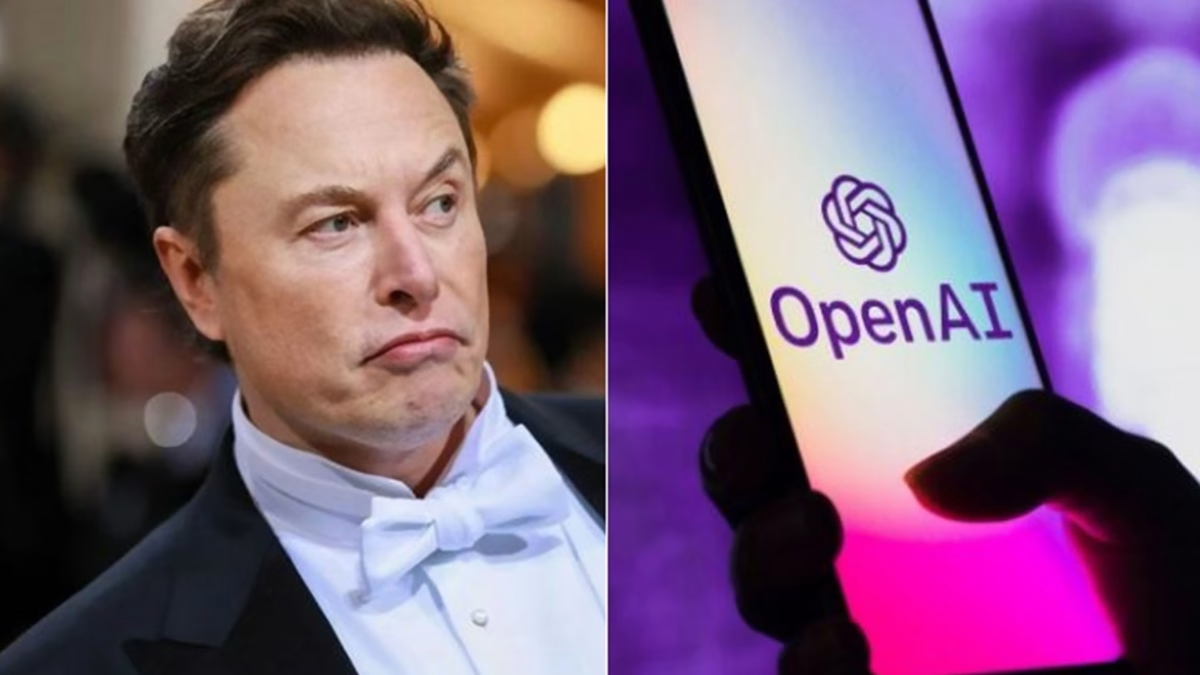
The escalating legal battle between OpenAI and Elon Musk has captured widespread attention, highlighting the intricate dynamics within the artificial intelligence sector. This dispute, rooted in foundational disagreements and strategic divergences, has significant implications for the future of AI development and governance.
Genesis of the Conflict
Elon Musk co-founded OpenAI in 2015 with the mission to advance artificial general intelligence (AGI) for the benefit of humanity. However, by 2018, Musk departed from the organization due to strategic differences, particularly concerning the company’s direction and governance. In 2023, he established xAI, a direct competitor in the AI landscape. The friction intensified when OpenAI transitioned to a “capped-profit” model in 2019, aiming to attract substantial funding necessary for large-scale AI research. Musk viewed this shift as a deviation from OpenAI’s original nonprofit ethos.Reuters+3Reuters+3Axios+3TechCrunch
Musk’s Legal Actions
In February 2025, Musk filed a lawsuit against OpenAI and its CEO, Sam Altman, alleging that the company had strayed from its foundational mission by prioritizing profits over the broader welfare of humanity. He contended that OpenAI’s close partnership with Microsoft was indicative of this shift. Furthermore, Musk accused OpenAI of violating its original agreements and sought legal intervention to realign the organization with its initial objectives.
OpenAI’s Counterclaims
In April 2025, OpenAI responded with a countersuit, accusing Musk of engaging in a pattern of harassment aimed at undermining the company’s operations. The countersuit highlighted Musk’s $97.4 billion takeover bid in February 2025, which OpenAI’s board unanimously rejected as a “sham bid.” OpenAI alleged that this move was part of Musk’s strategy to disrupt the company and gain control for personal benefit. AP News
Implications for the AI Industry
This high-profile dispute underscores the challenges faced by AI organizations in balancing ethical commitments with commercial imperatives. The outcome of this legal battle could set precedents for governance structures, funding mechanisms, and collaborative models within the AI community. It also raises critical questions about the role of personal ambitions and competitive dynamics in shaping the trajectory of AI research and deployment.
Conclusion
The legal confrontation between OpenAI and Elon Musk serves as a microcosm of the broader tensions in the AI sector, where innovation, ethics, and commerce intersect. As this case unfolds, it will undoubtedly influence discourse on responsible AI development and the frameworks necessary to ensure that technological advancements align with the collective interests of humanity.