Emerging Threat: Python-Based Backdoor Exploiting Tunneling Services
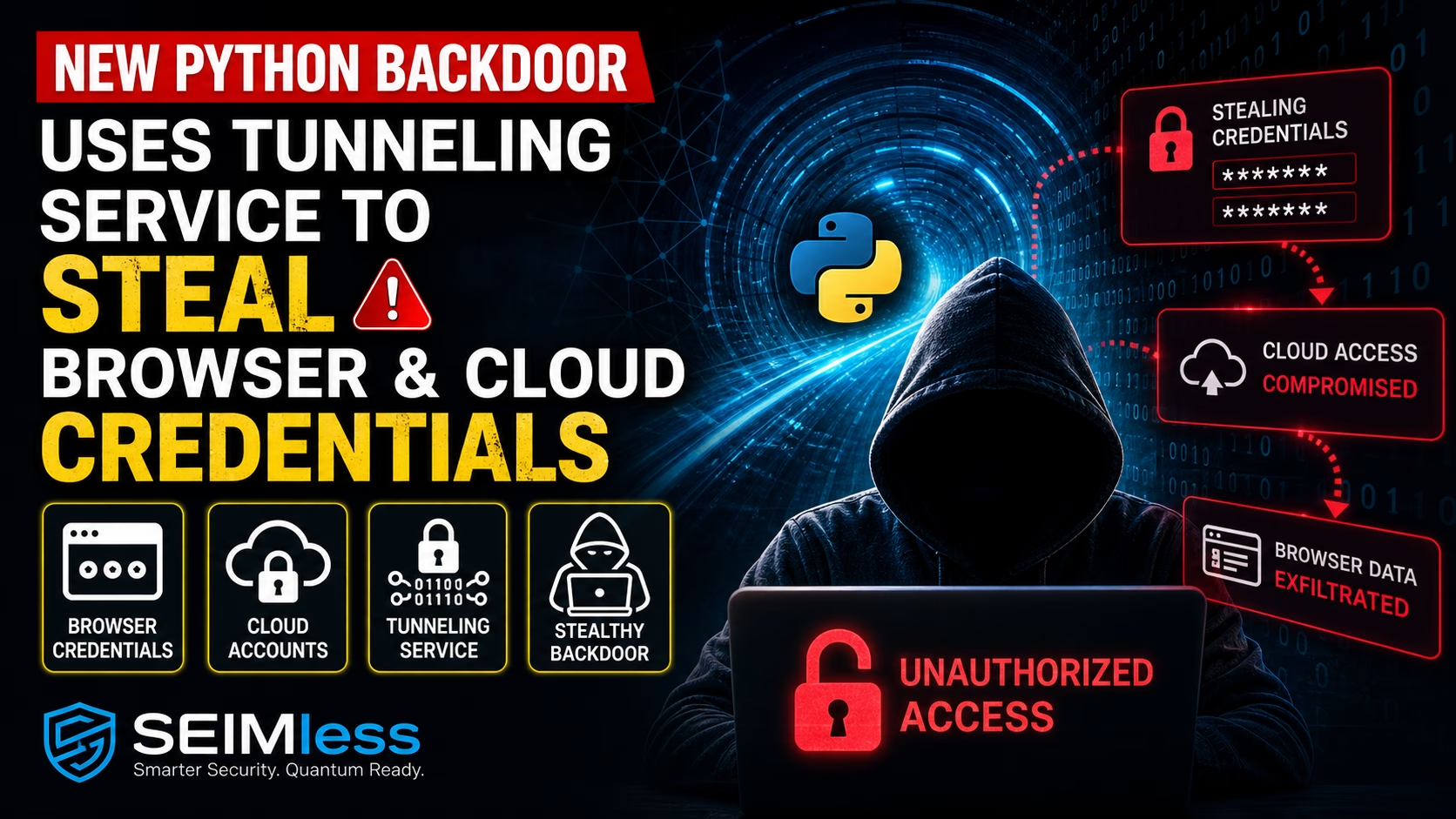
A newly identified cyber threat is raising alarms across enterprise security teams. According to The Hacker News cybersecurity report, researchers have uncovered a stealthy Python-based backdoor framework known as DEEP#DOOR, engineered to steal browser-stored credentials and cloud authentication data using advanced tunneling techniques. (The Hacker News)
Unlike conventional malware, this threat leverages public tunneling infrastructure to bypass traditional detection controls, making it highly evasive and persistent.
How the Attack Works (Technical Breakdown)
1. Obfuscated Initial Access
The attack begins with a malicious batch script loader, which disables endpoint defenses and deploys an embedded Python payload directly in memory—minimizing detection signatures. (Securonix)
2. Multi-Layer Persistence Mechanisms
Once executed, the malware establishes persistence through:
- Registry Run keys
- Scheduled tasks
- Startup folder scripts
- WMI event subscriptions
This layered persistence ensures long-term system compromise even after partial remediation. (Securonix)
3. Tunneling-Based Command & Control (C2)
Instead of traditional C2 servers, attackers use public tunneling services to:
- Create encrypted communication channels
- Evade firewall and network monitoring tools
- Mask attacker infrastructure
This approach significantly reduces forensic traceability and detection rates.
🔍 What Data Is at Risk?
The DEEP#DOOR backdoor is not just a remote access tool—it is a full-scale credential harvesting engine capable of extracting:
- Browser-stored passwords and session cookies
- Cloud service credentials (AWS, Azure, GCP)
- SSH keys and developer secrets
- Clipboard data and keystrokes
- Screenshots, microphone, and webcam feeds
Such capabilities enable account takeover, lateral movement, and cloud infrastructure compromise. (Securonix)
☁️ Why This Matters for Cloud & Enterprise Security
Modern enterprises rely heavily on cloud-first architectures and browser-based authentication. This makes credential theft one of the most critical attack vectors.
According to insights aligned with CISA (Cybersecurity & Infrastructure Security Agency) guidelines, compromised credentials are a leading cause of:
- Data breaches
- Unauthorized cloud access
- Critical infrastructure disruption (Kaspersky ICS CERT)
The use of tunneling services further complicates detection by blending malicious traffic with legitimate outbound connections.
🛡️ Detection & Mitigation Strategies
To defend against such advanced threats, organizations must adopt proactive and layered cybersecurity approaches:
✅ Endpoint & Behavioral Monitoring
Deploy advanced EDR/XDR solutions capable of detecting:
- Suspicious Python execution
- Obfuscated scripts
- Unauthorized persistence mechanisms
✅ Network Traffic Analysis
Monitor outbound connections to:
- Unknown tunneling domains
- Unusual encrypted traffic patterns
✅ Identity & Access Security
- Enforce Multi-Factor Authentication (MFA)
- Rotate credentials regularly
- Use Zero Trust Architecture
✅ Threat Intelligence Integration
Leverage platforms like:
These frameworks help map adversary tactics and strengthen detection engineering.
🚀 How ibm/SEIMless Secures Your Enterprise
At ibm/SEIMless, we specialize in Quantum-Resistant and Advanced Cybersecurity Solutions designed to counter evolving threats like Python-based backdoors.
🔐 Our Capabilities:
- Real-time threat detection & response
- AI-driven anomaly detection
- Secure communication frameworks
- Cloud & endpoint protection at scale
We help enterprises move from reactive security to predictive defense.
📢 Call to Action
Cyber threats are evolving faster than ever—and traditional defenses are no longer enough.
👉 Visit https://seimless.com to explore how ibm/SEIMless can protect your organization from next-generation cyber threats.
👉 Get a free security consultation and secure your infrastructure today.
📊 FAQ
Q1: What is a Python backdoor?
A Python backdoor is malicious code written in Python that enables unauthorized remote access and data exfiltration.
Q2: Why are tunneling services dangerous in cyberattacks?
They hide attacker communication within legitimate traffic, bypassing traditional security controls.
Q3: How can businesses protect against credential theft?
By implementing MFA, endpoint detection, Zero Trust security, and continuous monitoring.
#CyberSecurity #PythonMalware #CloudSecurity #ThreatIntelligence #DataProtection #ZeroTrust #Infosec #ibmSEIMless #AIsecurity #CredentialTheft