
On November 10, 2026, the Cybersecurity and Infrastructure Security Agency (CISA) added a Microsoft Outlook vulnerability to its Known Exploited Vulnerabilities (KEV) catalog and gave covered federal agencies until November 24 to fix it. This Outlook security flaw, tracked as CVE-2026-124194, can expose a user’s NTLMv2 authentication data when that person opens a specially crafted message file. Microsoft has confirmed exploitation in the wild.
The Microsoft severity score is only 6.5 (Medium), which is exactly why this one can slip down a patch queue. This guide explains what the Outlook security flaw does, what is still unknown, and a practical response plan your team can start today.
What is the Outlook security flaw CVE-2026-124194? It is an actively exploited Microsoft Outlook spoofing vulnerability. Outlook fails to warn the user before connecting to an outside network location, so a crafted message file can make it send NTLMv2 authentication data to an attacker. That data can help the attacker impersonate the user. The user must open the file; the Preview Pane is not a vector.
Key Takeaways
- Exploitation is confirmed. Microsoft reports it, and CISA added the flaw to KEV on November 10, 2026, with a November 24 federal deadline.
- It needs one click. The victim must open the malicious file. It is not zero-click, and the Preview Pane is not an attack path.
- The payload is a credential. The leaked NTLMv2 material can enable account impersonation.
- Patch and verify. Confirm installed Office build numbers instead of trusting deployment dashboards.
- Layer the defense. Block unnecessary outbound SMB, restrict NTLM, and watch for odd outbound authentication.
What Federal Officials Are Warning About the Outlook Security Flaw
CISA’s KEV listing names the weakness “Missing User Interaction for Potentially Unsafe Action.” In plain terms, Outlook is supposed to pause and ask before it reaches out to an external location. In this case it does not. The weakness maps to CWE-356, a category for software that takes a security-sensitive step without asking the user.
Per reporting on the advisories, the affected products include Microsoft 365 Apps for Enterprise and Office LTSC 2021 and 2024, in 32-bit and 64-bit editions. The fixed builds reported for LTSC are 16.0.14334.21048 (2021) and 16.0.17932.21140 (2024). Coverage did not list a fixed build for Microsoft 365 Apps for Enterprise, so use Microsoft’s Microsoft 365 Apps security update history and the Security Update Guide to confirm yours.
| Item | Detail |
| CVE | CVE-2026-124194, Microsoft Outlook Spoofing Vulnerability |
| Microsoft rating | CVSS 3.1 base score 6.5 (Medium); confidentiality impact high |
| Added to KEV | November 10, 2026 |
| Federal remediation due | November 24, 2026 |
| User action needed | Yes. The victim must open a crafted message file |
| Preview Pane | Not an attack vector, per Microsoft |
| Ransomware use | Listed by CISA as unknown |
You can read the federal record in the National Vulnerability Database entry and learn how CISA decides what belongs on the KEV program page.
How This Outlook Security Flaw Works
NTLM is a legacy Windows challenge-response protocol. When a Windows client authenticates to a server, it proves who it is with an NTLMv2 response derived from the user’s password. Hand that material to an attacker’s server and you may have handed over something close to a credential. Microsoft’s own NTLM overview explains why the protocol is weaker than Kerberos.
The Unwarned Handshake
We call the core problem the unwarned handshake: a trusted application quietly authenticates to an untrusted host on the user’s behalf, with no prompt and no obvious sign. Outlook is trusted, it runs on nearly every business desktop, and it already holds the user’s logged-in context. When the guardrail is missing, the handshake happens at the moment the file opens.
This is not a new class of trick. In 2023, Microsoft documented a similar Outlook problem in CVE-2023-23397 and published mitigations that centered on blocking outbound SMB and applying updates. The MITRE ATT&CK catalog tracks the broader pattern as Forced Authentication (T1187).
What an Attacker Can Do With a Leaked Hash
Public reporting on this campaign does not say what attackers did next, so we describe the standard options defenders should plan for, not confirmed activity in this case:
- Offline cracking. A weak or reused password can be recovered from captured NTLMv2 material.
- Captured authentication can be forwarded to another service that accepts NTLM and lacks signing. See MITRE T1557.001.
- Pass-the-hash style abuse. In NTLM environments, hash material can sometimes be used directly. See MITRE T1550.002.
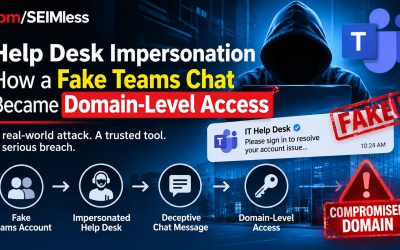
Relay paths matter because they lead to servers, not just mailboxes. In our earlier analysis of help desk impersonation and AD CS certificate abuse, NTLM relay was one step that could turn a small foothold into domain-level access. The lesson carries over: a credential leak is rarely the end of the story.
What We Know and What We Do Not
Here is the state of the evidence on this Outlook security flaw. Confirmed: exploitation is real, the flaw is patched, the Preview Pane is not involved, and CISA set a federal deadline. Not publicly stated in the reviewed advisories: who the attackers are, who was targeted, how large the campaign is, and what indicators of compromise exist. CISA lists ransomware use as unknown, so avoid labeling this a ransomware campaign.
That gap is useful guidance in itself. Without indicators, you cannot rely on a signature feed to catch exploitation of this Outlook security flaw. You need behavior-based detection and network controls that stop the credential from leaving.
Why a Medium Score Should Not Set Your Priority
A CVSS number measures technical severity in the abstract. It does not measure whether criminals are already using the bug. NIST’s SP 800-40 Rev. 4 encourages organizations to prioritize by threat and business impact, and a KEV entry is as strong a “threat” signal as the public gets. In our post on risk-based vulnerability management, we argued that raw CVE counts have stopped measuring risk. This Outlook security flaw is a clean example: Medium on paper, urgent in practice.
The Verizon Data Breach Investigations Report has repeatedly shown that stolen credentials and exploited vulnerabilities rank among the leading routes into organizations. This flaw sits where both meet.
A 24-Hour Response Plan for the Outlook Security Flaw
1. Patch and verify the build
Deploy Microsoft’s November 10 fixes to every affected Office installation. Then verify installed build numbers on a sample of endpoints, including laptops that rarely join the corporate network, because deployment reports can overstate coverage.
2. Block unnecessary outbound SMB
Workstations rarely need to speak SMB to the internet. Blocking outbound TCP 445 at the perimeter is a long-standing control for Outlook NTLM leaks and works even when a patch lags. Review Microsoft’s SMB security guidance and enforce signing so relayed sessions fail.
3. Audit, then restrict NTLM
Microsoft is steering customers from NTLM to Kerberos. Use its settings to restrict outgoing NTLM traffic to remote servers and, where supported, the newer SMB NTLM blocking option. Audit first so you do not break legacy applications.
4. Protect privileged accounts
Place high-value accounts in the Protected Users group, which stops NTLM authentication for those members. Pair it with phishing-resistant MFA per CISA’s fact sheet.
5. Hunt for the signature behavior
Search firewall and endpoint logs for workstation-to-internet SMB attempts, Outlook or Office processes making outbound connections to unfamiliar hosts, and NTLM authentication to external addresses. Our EDR and endpoint detection services are built around this kind of behavioral visibility.
6. Prepare the reset
If you find a suspicious outbound authentication, treat the account as exposed: reset the password, revoke sessions, and review mailbox and server logins. The NIST incident response guidance (SP 800-61 Rev. 3) offers a clear structure.
| Timeframe | Action | Owner |
| Hours 0–24 | Inventory Office builds; push fixes; block outbound TCP 445 | Endpoint and network teams |
| Days 2–7 | Verify builds; hunt for outbound SMB and NTLM to external hosts; brief the help desk | SecOps |
| Days 8–30 | Audit NTLM use; enforce SMB signing; expand Protected Users; test credential reset runbook | Identity and infrastructure |
| Quarter | Plan Kerberos migration for NTLM dependencies; add egress policy to change control | Architecture |
Where Network Design Closes the Gap
Patching fixes one product. Network design limits every product, including the next Outlook security flaw. If a workstation cannot send authentication traffic to an arbitrary internet host, the unwarned handshake has nowhere to land. ibm/SEIMless approaches that in layers:
- Egress policy: the Exodus NxtGen Firewall and Zero Trust Content Security are where outbound rules and content inspection belong.
- Detection and response: Exodus Aria ADR and EDR help surface odd authentication patterns.
- Consistent branch policy: an SD-WAN or MPLS replacement design should apply one egress standard at every site, a point we made in Secure Applications Anywhere.
- Contained desktops: Desktop as a Service and a private hybrid cloud shrink what a single compromised credential can reach.
- Recovery: backup and recovery gives you a safe fallback if a credential leak escalates.
The principle comes straight from NIST SP 800-207 on zero trust: never grant trust based on network location or a prior session alone. Our Exodus Key Management, Data in Motion, and Data at Rest services address the protection of what the credentials guard. For the longer horizon, read how quantum computing reshapes encryption and why Transparent Encryption belongs on the roadmap.
Why Regulated Industries Should Act Faster
Financial services. The NYDFS cybersecurity regulation (23 NYCRR 500), FFIEC IT Examination Handbook, and SEC cyber disclosure rules all expect timely vulnerability management and incident reporting. The FTC Safeguards Rule reaches many non-bank lenders.
Healthcare. The HIPAA Security Rule requires risk analysis and access controls; a leaked credential tied to a clinician mailbox can touch protected health information.
Insurance and small business. Carriers increasingly ask about KEV remediation speed. The FTC small business cybersecurity page and CISA’s Cross-Sector Cybersecurity Performance Goals offer a baseline. Federal software-vendor expectations are collected under CISA’s Secure by Design program, which is useful when you question vendors about default-safe prompts like the one Outlook skipped.
Governance frameworks help organize the work: NIST CSF 2.0 for program structure, NIST SP 800-63B for authentication strength, and the CISA and MS-ISAC ransomware guide for response. The NSA also publishes practical hardening material at its Cybersecurity directorate. If a user does report a suspicious message, encourage them to file with the FBI’s Internet Crime Complaint Center after your internal escalation.
Lessons Beyond This One CVE
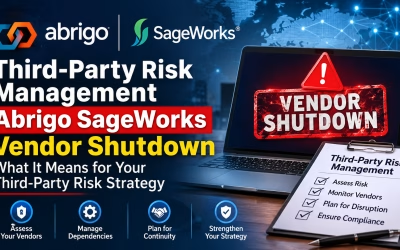
The Outlook security flaw is a symptom, not an outlier. Three themes recur across the incidents we track. First, vendors disable safety prompts by accident, and the cost lands on customers. Our post on third-party risk management shows how vendor decisions become your outage. Second, end-of-support software multiplies exposure; see end-of-support edge devices and our Reduce, Replace, Recover plan. Third, legacy protocols such as NTLM keep paying out for attackers until you remove the dependency.
Frequently Asked Questions
What is the Outlook security flaw CISA warned about?
It is CVE-2026-124194, an Outlook spoofing vulnerability. A crafted message file can make Outlook contact an attacker-controlled location without the usual warning, exposing NTLMv2 authentication data. CISA added it to KEV on November 10, 2026.
Is this a zero-click attack?
No. The victim must open the malicious file, and Microsoft says the Preview Pane is not an attack vector.
Which products are affected?
Reported affected products are Microsoft 365 Apps for Enterprise and Office LTSC 2021 and 2024. Reported fixed LTSC builds are 16.0.14334.21048 (2021) and 16.0.17932.21140 (2024). Confirm the Microsoft 365 Apps build in Microsoft’s advisory.
What is the CISA deadline?
November 24, 2026 for covered federal civilian agencies. Private organizations are not bound by it, but it is a sensible target.
Does blocking outbound SMB help?
Yes. Blocking unnecessary outbound TCP 445 from workstations is a long-standing mitigation for Outlook NTLM leaks. Treat it as a complement to patching, not a replacement.
How can ibm/SEIMless help?
We help medium and enterprise organizations design egress controls, segmentation, endpoint detection, and quantum-resistant networking. Call 646-546-5245 or email in**@**********ss.com.
Close the Gap Before November 24
Whether you need a rapid egress review, an NTLM dependency audit, or a roadmap that links patching to zero trust and quantum-resistant networking, our team is ready to help. Visit the ibm/SEIMless home page to explore services, then talk with an engineer.
Phone: 646-546-5245
Email: in**@**********ss.com
Address: One Liberty Plaza, New York, NY 10006
Sources and Further Reading
Event details (CISA KEV addition on November 10, 2026, the November 24 deadline, affected products, fixed LTSC builds, Preview Pane statement, and unknowns) come from trade-press coverage of the Microsoft and CISA advisories published November 11–13, 2026. Confirm final details at the primary links above before acting.