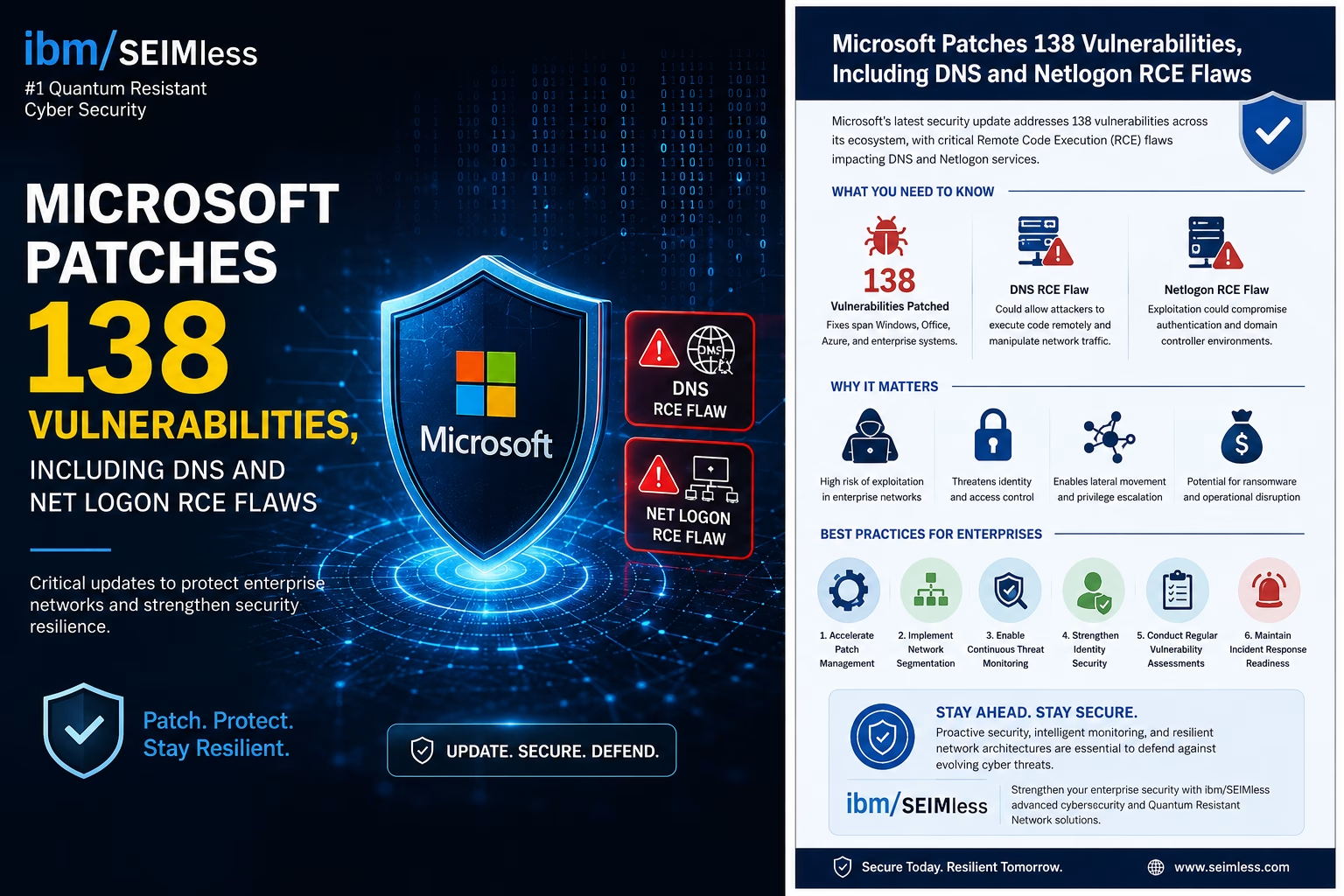
Cybersecurity teams worldwide are once again on high alert after Microsoft released security patches addressing 138 vulnerabilities across its ecosystem. Among the most concerning are critical Remote Code Execution (RCE) flaws affecting DNS services and Netlogon protocols — vulnerabilities capable of enabling attackers to gain unauthorized access, disrupt enterprise operations, and potentially compromise entire network infrastructures.
The latest Patch Tuesday release underscores a growing reality for organizations: threat actors continue targeting foundational network services that many enterprises depend upon daily. From hybrid cloud environments to legacy on-premises infrastructure, unpatched vulnerabilities remain one of the most exploited attack vectors in modern cybersecurity operations.
For enterprises, the implications extend far beyond routine system maintenance. Critical services like DNS and Netlogon are deeply embedded within authentication, domain management, and network communication processes. Exploitation of these weaknesses could allow attackers to execute malicious code remotely, elevate privileges, move laterally across networks, and deploy ransomware at scale.
Why These Vulnerabilities Matter
Remote Code Execution vulnerabilities are considered among the most dangerous categories of cybersecurity threats because they allow attackers to execute arbitrary code on targeted systems without physical access. In enterprise environments, DNS and Netlogon services are often trusted implicitly, making them attractive targets for advanced threat actors.
The DNS vulnerability patched by Microsoft could potentially enable attackers to manipulate network traffic, redirect communications, or compromise internal systems by exploiting weaknesses in name resolution services. Meanwhile, flaws within Netlogon services may allow attackers to interfere with authentication mechanisms inside Active Directory environments.
Security researchers warn that vulnerabilities affecting authentication and directory services frequently become high-priority targets for nation-state actors and ransomware groups due to their potential impact on enterprise identity infrastructures.
Organizations operating outdated Windows Server environments, poorly segmented networks, or delayed patch management processes may face elevated exposure risks.
The Expanding Threat Landscape
The scale of this month’s security release highlights the increasing complexity of modern attack surfaces. Enterprises today operate across multi-cloud environments, remote work infrastructures, edge devices, and interconnected third-party ecosystems. Each connected endpoint creates additional opportunities for exploitation if security hygiene is not continuously maintained.
Cybercriminals are accelerating exploitation timelines, often weaponizing disclosed vulnerabilities within days of public disclosure. This creates significant pressure on IT and security teams to rapidly validate, prioritize, and deploy patches while minimizing operational disruptions.
The rise of AI-assisted cyberattacks further complicates the threat landscape. Automated reconnaissance, phishing campaigns, and exploit development tools are enabling attackers to scale operations faster than ever before.
As organizations continue digital transformation initiatives, proactive vulnerability management is becoming a mission-critical cybersecurity requirement rather than a routine IT function.
Best Practices for Enterprises
To reduce exposure to critical vulnerabilities such as DNS and Netlogon RCE flaws, organizations should implement several cybersecurity best practices:
1. Accelerate Patch Management
Deploy security updates immediately after validation and prioritize critical infrastructure systems exposed to external networks.
2. Implement Network Segmentation
Separate critical authentication systems and domain controllers from general user environments to reduce lateral movement opportunities.
3. Enable Continuous Threat Monitoring
Utilize Security Information and Event Management (SIEM) platforms and behavioral analytics to identify abnormal authentication activities.
4. Conduct Regular Vulnerability Assessments
Frequent scanning and penetration testing help organizations identify exploitable weaknesses before attackers do.
5. Strengthen Identity Security
Apply least-privilege access models, enforce multi-factor authentication, and continuously monitor privileged accounts.
6. Maintain Incident Response Readiness
Organizations should maintain updated incident response playbooks to rapidly contain threats if exploitation occurs.
The Role of Proactive Cybersecurity
Security patching alone is no longer sufficient in today’s rapidly evolving threat environment. Enterprises require layered cybersecurity strategies that combine prevention, detection, response, and recovery capabilities.
Advanced security operations platforms, threat intelligence integration, endpoint monitoring, and zero-trust architectures are increasingly essential for defending enterprise infrastructures against modern cyber threats.
At ibm/SEIMless, we understand that organizations require more than reactive security measures. Our advanced cybersecurity and Quantum Resistant Network solutions are designed to help enterprises strengthen resilience against evolving digital threats while maintaining operational continuity.
As cyberattacks continue targeting critical infrastructure and enterprise authentication systems, proactive security modernization becomes vital for long-term business protection.
Call To Action
Protect your organization against evolving cyber threats with advanced cybersecurity solutions from ibm/SEIMless.
Discover how intelligent threat monitoring, resilient network architectures, and Quantum Resistant security technologies can help secure your enterprise infrastructure against emerging vulnerabilities and sophisticated cyberattacks. Contact Us | See Our Services