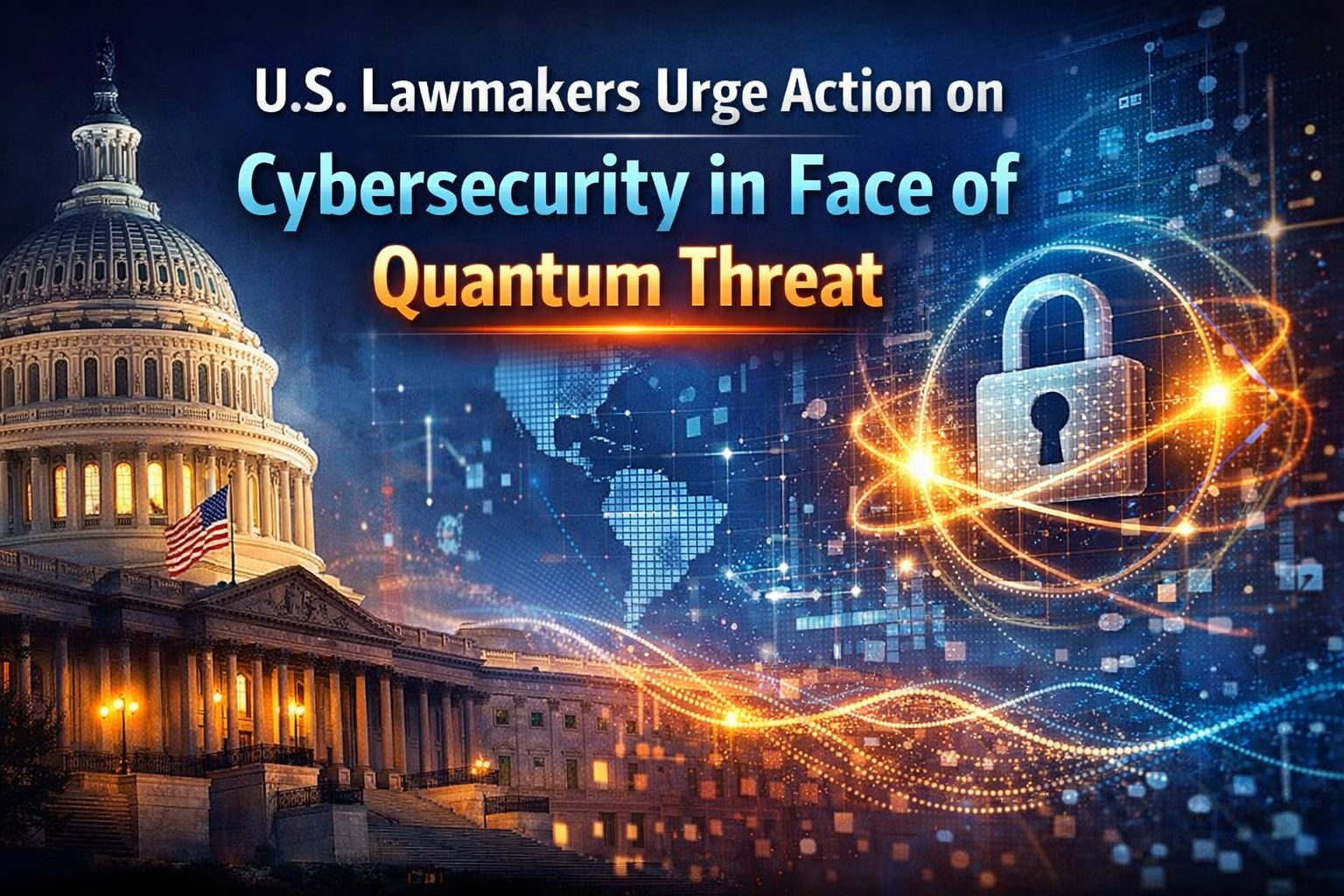
As quantum computing advances from theoretical research into real-world capability, U.S. lawmakers are raising urgent concerns about the future of cybersecurity. The emerging consensus is clear: today’s encryption standards may not survive tomorrow’s quantum-powered attacks.
The Quantum Threat Is No Longer Hypothetical
Traditional encryption methods such as RSA and ECC (Elliptic Curve Cryptography) underpin nearly every secure digital transaction—from banking systems to government communications. However, with the rise of quantum computing, these systems face a fundamental vulnerability.
Quantum computers, leveraging principles like superposition and entanglement, could potentially break widely used cryptographic algorithms in a fraction of the time required by classical computers. This scenario, often referred to as “Q-Day,” would mark the point at which current encryption becomes obsolete.
U.S. lawmakers are now treating this as a near-term national security issue rather than a distant technological concern.
Congressional Push for Post-Quantum Readiness
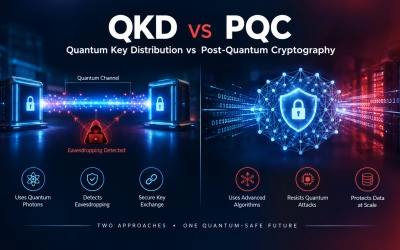
In recent policy discussions, members of Congress have urged federal agencies and private-sector organizations to accelerate their transition toward post-quantum cryptography (PQC). This includes adopting quantum-resistant algorithms that can withstand attacks from both classical and quantum computers.
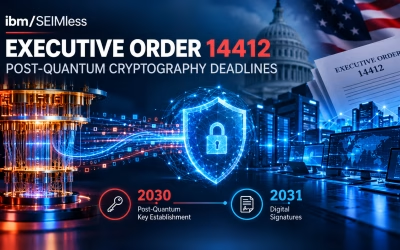
The U.S. government, through agencies like the National Institute of Standards and Technology (NIST), has already begun standardizing PQC algorithms. However, lawmakers emphasize that implementation timelines must be shortened significantly.
Key concerns include:
- Critical infrastructure vulnerability (energy, telecom, healthcare)
- Data harvesting attacks (store now, decrypt later strategies)
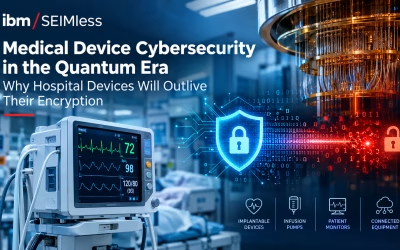
- Global cybersecurity competition, especially with nations investing heavily in quantum research
Why Immediate Action Is Critical
One of the most alarming aspects of the quantum threat is the “harvest now, decrypt later” strategy. Malicious actors can capture encrypted data today and store it until quantum technology matures enough to decrypt it.
This puts sensitive long-term data—such as government records, intellectual property, and personal information—at immediate risk.
Lawmakers argue that waiting until quantum computers are fully operational is not an option. By then, it may be too late to protect previously intercepted data.
Industry Response and Challenges
While large enterprises and tech leaders are beginning to explore quantum-safe solutions, many organizations remain unprepared. The transition to post-quantum cryptography is not a simple upgrade—it requires:
- Overhauling existing encryption frameworks
- Updating hardware and software systems
- Ensuring backward compatibility
- Managing performance trade-offs
For sectors like telecommunications and finance, this transformation could take years, further underscoring the urgency of early adoption.
The Role of Public-Private Collaboration
Lawmakers are advocating for stronger collaboration between government agencies, private companies, and cybersecurity firms. This includes:
- Funding research into quantum-resistant technologies
- Creating regulatory frameworks for cybersecurity standards
- Encouraging information sharing on emerging threats
Public-private partnerships will be essential to ensure a coordinated and scalable response to the quantum challenge.
Preparing for a Quantum-Secure Future
Organizations must begin assessing their cryptographic infrastructure today. A proactive approach includes:
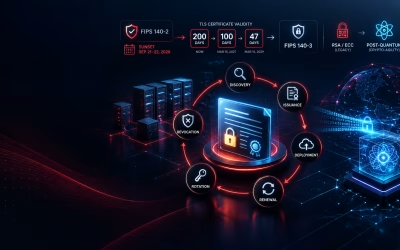
- Conducting crypto-agility assessments
- Identifying vulnerable systems and data flows
- Implementing hybrid encryption models (classical + quantum-resistant)
- Staying aligned with evolving NIST standards
Companies that delay action risk falling behind in both security and regulatory compliance.
Conclusion
The message from U.S. lawmakers is unequivocal: the quantum cybersecurity threat demands immediate and decisive action. As quantum computing continues to evolve, so too must the strategies used to protect digital assets and national security.
The transition to post-quantum cryptography is not just a technical upgrade—it is a strategic imperative. Organizations that act now will be better positioned to navigate the next era of cybersecurity, while those that wait may face irreversible consequences.